Purely by coincidence, I was able to check out Starkbierfest (Strong Beer Fest) in Munich on my way to my brother’s 50th birthday celebration in Austria. The lesser-known Munich beer fest takes place during Lent when brewers supply hearty Doppelbock beer to fasting monks, giving them sustenance to make it through the day. They call this time of year “Starkbierzeit”, meaning strong beer season.
There’s a good argument to be made that it’s better than Oktoberfest. And it’s one example of Munich beer culture that doesn’t immediately come to mind when outsiders think of the infamous beer-loving city.
Starkbierzeit has been on my radar for a while, and I had heard of a couple of other beer-related things that I wanted to check out in Munich. Things that you’re not going to find in a guidebook. With just over twenty-four hours to myself, I took the opportunity to explore them all. Liver be damned.
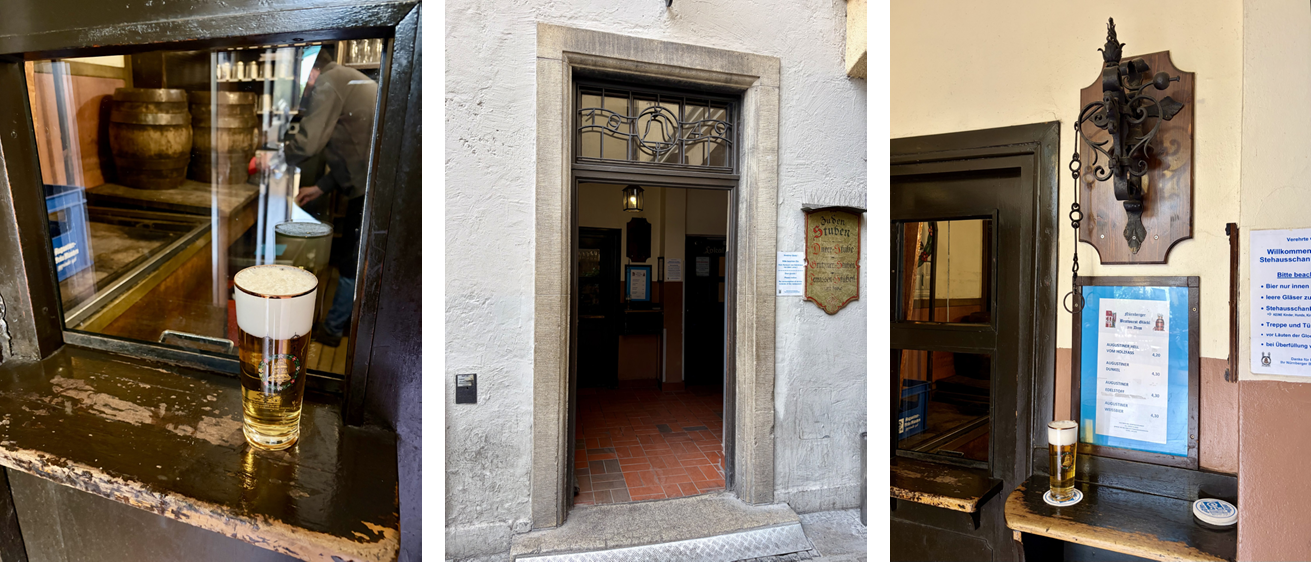
The Stehausschank at Nürnberger Bratwurst Gloeckl am Dom. Note the bell next to the window.
My first opportunity came up after lunch at Nuernberger Bratwurst Gloeckl am Dom. Many know of this restaurant’s succulent little sausages and the tip-top pours of Augustiner, but tucked away by an ancillary entrance to the restaurant is a nearly extinct Munich beer tradition.
The restaurant has a separate standing bar, known as a “Stehausschank”. The small, austere space is designed for a quick beer. So, there’s no seating or any other type of feature meant to accommodate someone for a lenghty period of time.
The austerity is by design. It’s also part of its charm and what makes it unique.
There’s a buzz to the space from the window that serves customers of the Stehausschank and the restaurant, to the hustle of the Munich street life just outside the door. Patrons and restaurant employees regularly come and go, but the beer’s impeccability grounds you. Specifically the Augustiner Helles vom fass (from the barrel). It locks you in, making you impermeable to any potential distraction.
In addition to the Helles, the day I was there, they were also serving Augustiner’s Dunkel, Edelstoff, and Weissbier.
Aside from the beer window, other notable features are a cigarette vending machine and a bell on the wall. Don’t ring it. If you do, you have to buy everyone a round. The good news is that if you make this mistake, the space can’t accommodate many people.
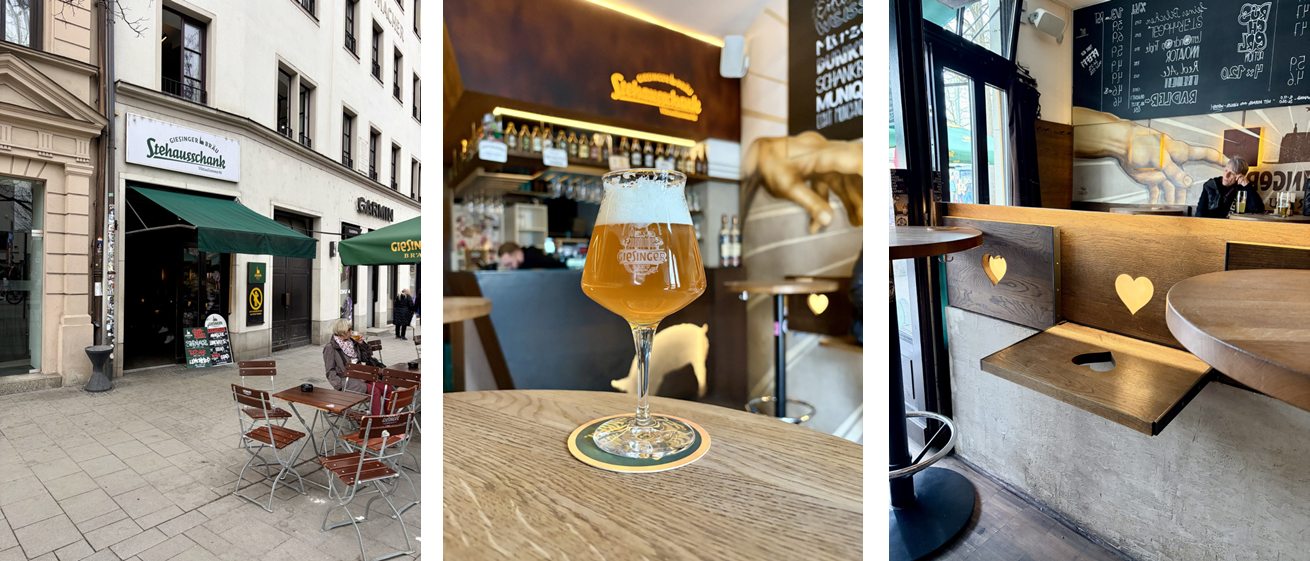
Local brewery Giesinger has opened several establishments around the city that they call Stehausschank. The experience is a modern interpretation of the tradition. They are casual, beer-focused bars, and they give a nod to the tradition seen at Bratwurst Gloeckl. However, they have some seating and definitely feel more inviting like a traditional drinking establishment that welcomes a few rounds as opposed to a quick one on the go.
Giesinger has several Stehausschank locations in town, including one across from the open-air market Viktualienmarkt, which was where I went. There were no chairs or stools inside, but the walls include seating that can be folded down if customers want them. There were a few small tables too.
The lager heavy menu was varied, but included a Red Ale and a Triple. I had an excellent Schankbier (it was served in a Teku glass, and I’m saving my comments on that for another post.)
Just a few doors down from this spot is Zum Stiftl Stehausschank. As nice as this place was, including the small door behind the bar where wooden kegs of Augustiner are loaded up for tapping, it was even less of a Stehausschank than the Giesinger spot I visited. Trying to exercise some restraint, I opted for an excellent NA Augustiner Hell here.
There were several other “Stehausschank” I saw around town, but none of them seemed to be a proper “standing bar”. They all look like great places for a drink, but if they’re going to use that name, it would be great to see them embrace the tradition a bit more. Or, just call it something else.
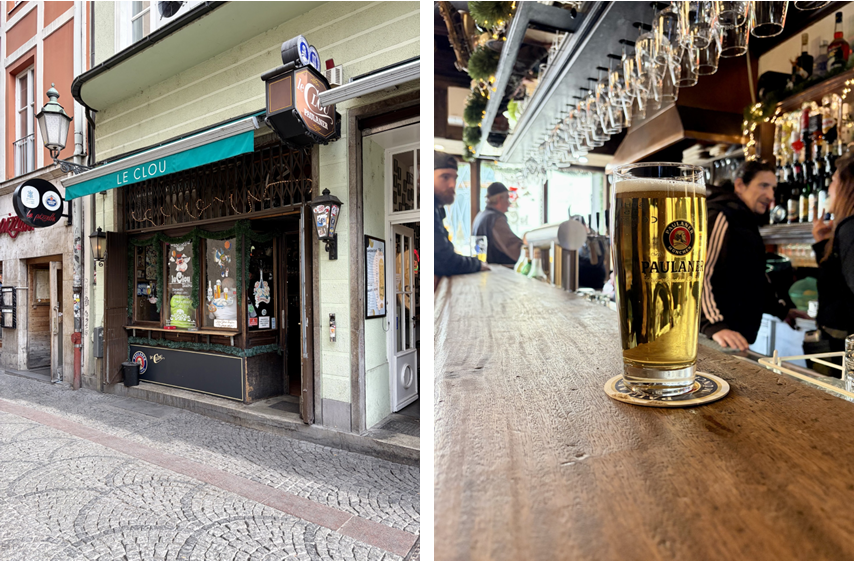
Far from the kitschy beer halls of Munich, Boazn are small, unpretentious pubs that, as with the Stehausschank, cater to locals. One might even call them dive bars.
Located in the center of town, Le Clou was the first Boazn I visited. It’s a great, compact bar with dedicated regulars, despite its touristy location. Several beers are available, but my hunch is that Augustiner is the drink of choice with Le Clou’s patrons. Staff and regulars were friendly, and readily willing to chat. As I told them I was heading to Starkbierfest later in the evening, they warned me about the strength of the beer.
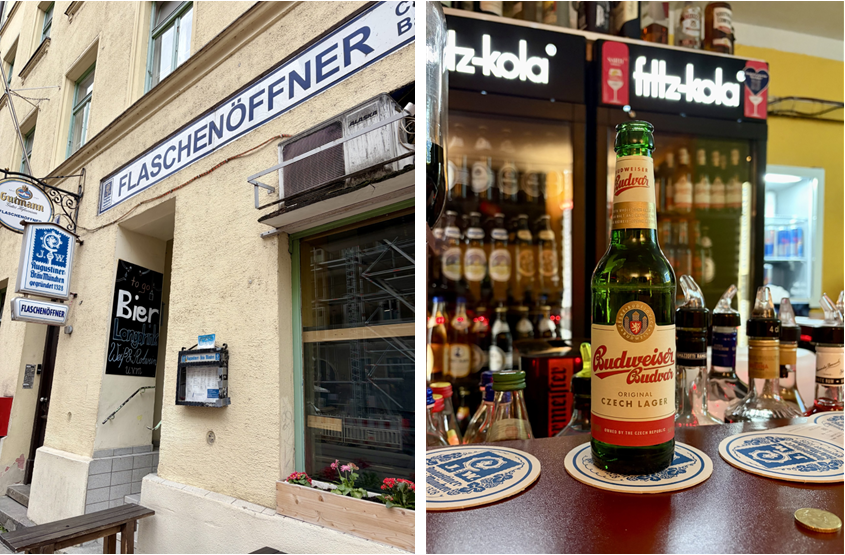
The second one I visited is called Flaschenöffner, and it’s just outside the old town in the Gärtnerplatzviertel neighborhood. Flaschenöffner is a bit divier than Le Clou, which is in no way meant to be an insult. It’s a great spot. One I could see myself frequenting if I lived in the area.
As it was a Monday night, it was a little quiet. But there were small groups of people enjoying themselves over a few drinks, and it had a good vibe. The beer list was a good mix of local and traditional, as well as more contemporary styles and regional beers too. I opted for a skunked bottle of Budvar. It somehow tasted right in the moment.
Switching gears, Starkbierfest is a great opportunity to experience the romantic elements of Oktoberfest (beers by the liter, people dressed in Trachten (i.e. dirndls and lederhosen) dancing on tables, etc.) without having to deal with the mobs of tourists.
Instead of the festivities taking place at the infamous Theresienwiese (Therese's Meadow) fairground, where Oktoberfest occurs, breweries celebrate Starkbierzeit at their varying locations around town.
Paulaner is thought to be the first to make Doppelbock, and the Starkbierzeit festivities at their Nockherberg location are viewed by many as the place to be. So, that’s where I went.
Though outdoor space is available, the party is really inside with an expansive amout of tables and a stage for live music. I felt a little like an outsider in the more sparsely populated area of venue with unreserved tables, but I didn’t feel alone.
Before getting too festive, I ate Schweinsbraten (crispy roast pork) with a jus and Kartoffelknodel (potato dumplings). It’s a good dish to pair with Paulaner’s Doppelbock called “Salvator”. The food was good. Nothing to write home about. But the beer was great. It’s not a style I gravitate to often due to its sweetness and high ABV (theirs weighs in at 7.9-percent), but I do enjoy it. And I really enjoyed it in a stein at a fest where the particular beer itself is celebrated. It’s strength gave me liquid courage stand on my bench, sing, and hoist my beer in the air.
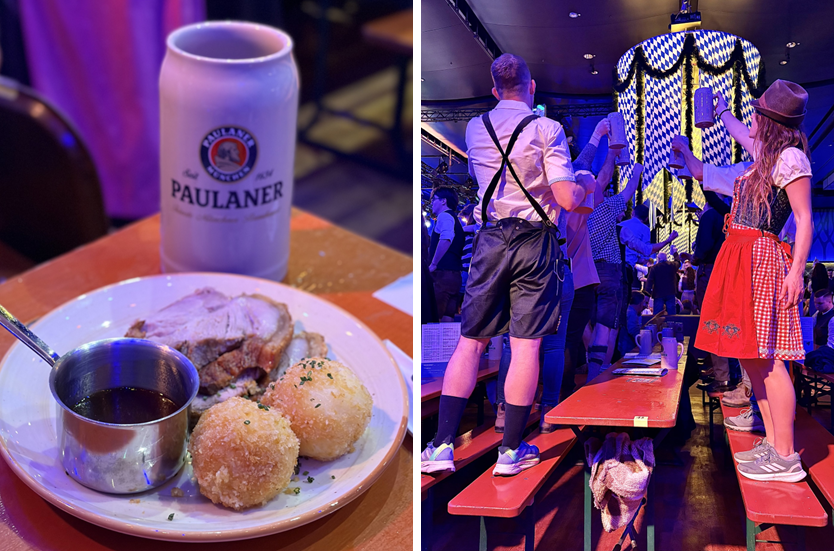
I was blown away by the amount of people there oozing Gemütlichkeit on a Monday night in early March. Despite being alone, I could’ve stayed longer, but it had been a long day of drinking beyond just Starkbierfest. So, I listened to the warnings received by the locals and strolled home on an incredibly pleasant evening, with an incredibly pleasant buzz. I walked away with a greater appreciation of Munich’s beer culture, which is more dynamic and interesting than how it’s typically portrayed.
(For deeper dives on Munich, check out the blog A Tempest and a Tankard by Franz D. Hofer, including a recent post on Starkbierzeit. Also, if you’re into Boazn, give the boaznengel3000 Instagram account a follow. Finally, there’s a very handy map, Münchner BOAZNRADAR, that’s worth exploring, especially if you’re heading to Munich.)