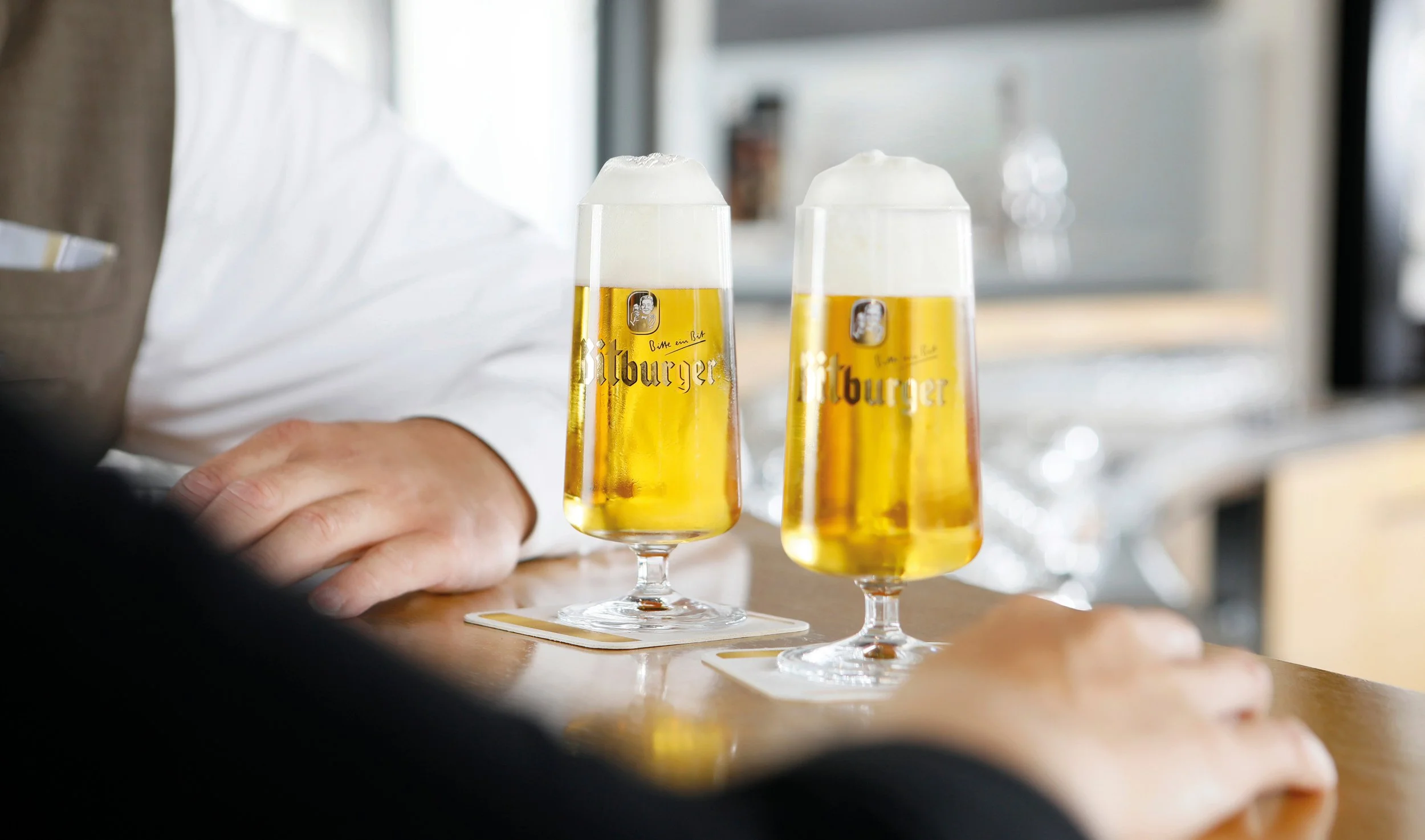
Though I would’ve been open to any invite to crush some beers and watch a World Cup match, when the invite was from Bitburger, I was particularly excited. Their Pilsner is a classic, but their stemmed glass is iconic. It made it into my first drinkware post in 2020.
The event took place at the German House of Soccer, which is a pop-up space in New York’s Chelsea neighborhood, created by the German Football Association (DFB) for the World Cup.
Though there was no indication on the invite that they would be using the glass, I was happy just to take part in an event hosted by a company with impeccable taste in drinkware. Nonetheless, I did wonder if they would be using them, and if it was at all possible for me to get my hands on one to bring home. But before we get to that, I have to give a little background on the brewery and their drinkware.
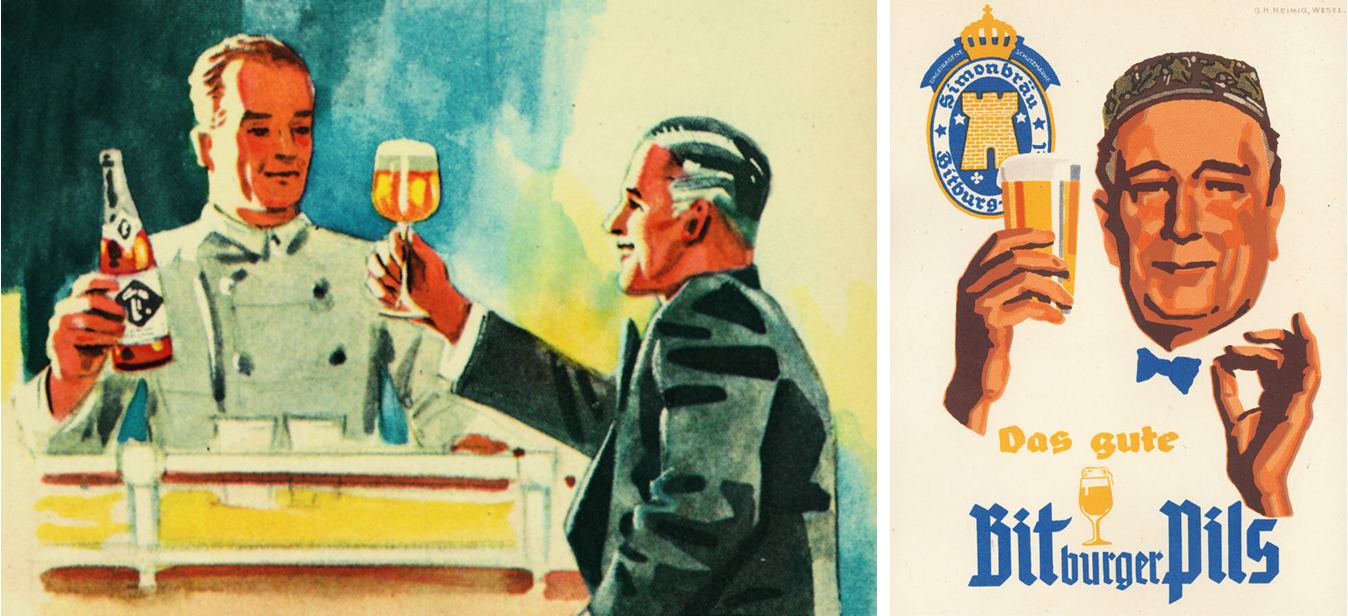
Bitburger advertisements from the early 20th century, each including different types of glassware. Source of images: Bitburger.
Bitburger’s origins are in 1817 in the town of Bitburg in what is now the western German state of Rhineland-Palatinate. By the 1880s, the brewery was making Pilsner-style beer and was advertising it in stemmed glassware shortly after.
Advertising from the earlier part of the 20th century shows the beer being served in a stemmed glass. It has a long stem and is in a style that is more akin to a wine glass. Another advertisement depicts a different type of stemmed glass that more closely resembles a beer glass.
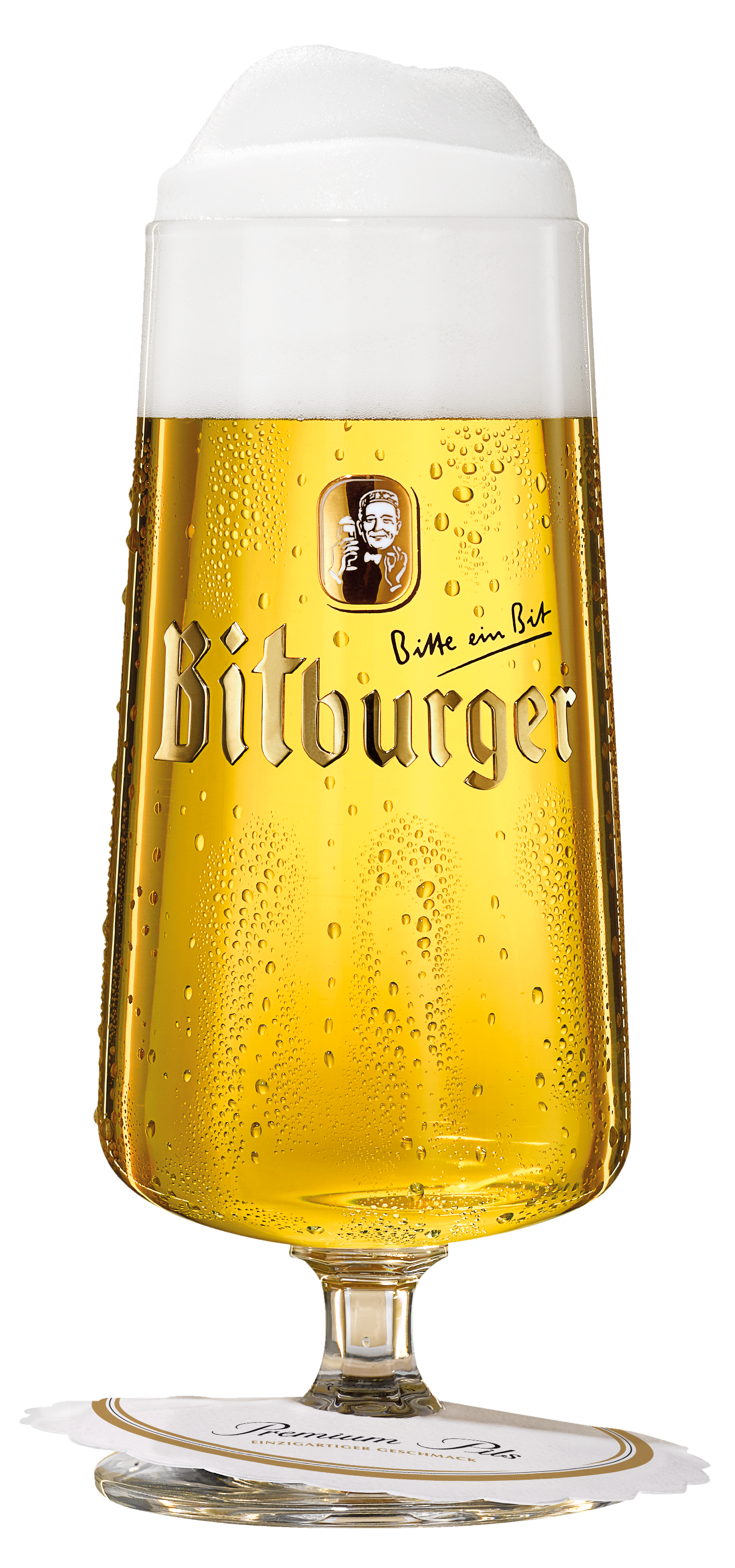
Fast-forward to 1964, which was when the renowned stemmed glass (sometimes call a “pokal”) was created for the brewery by Rastal. It reflects the Mid-Century Modern design aesthetic from when it was created, but it has endured for decades without feeling dated.
The shape helps concentrate aromas and retain its rocky head of foam. It’s more angular than tulip-shaped glasses, but it’s not extreme like the Teku. It also has a short stem, which helps it avoid being too top-heavy.
Beyond the glass itself, service of the beer includes two other notable elements. First is the three minute pour. The brewery makes a specific point to note that the seven minute pour that is advocated by others is too long, and leads to beer being served too warm and too flat.
The idea is that the three-minute pour creates the perfect amount and type of foam and leads to the ideal sensory experience.
Once the pour is over, a Pilsdecken (also referred to as a drip catcher or drip collar) is placed around the hexagonal stem of the glass. This traditional practice is found in a few places around Germany, but despite all the love of lager in the US in recent years, you will find these being used in very few places domestically. Bierstadt Lagerhaus is one notable example.
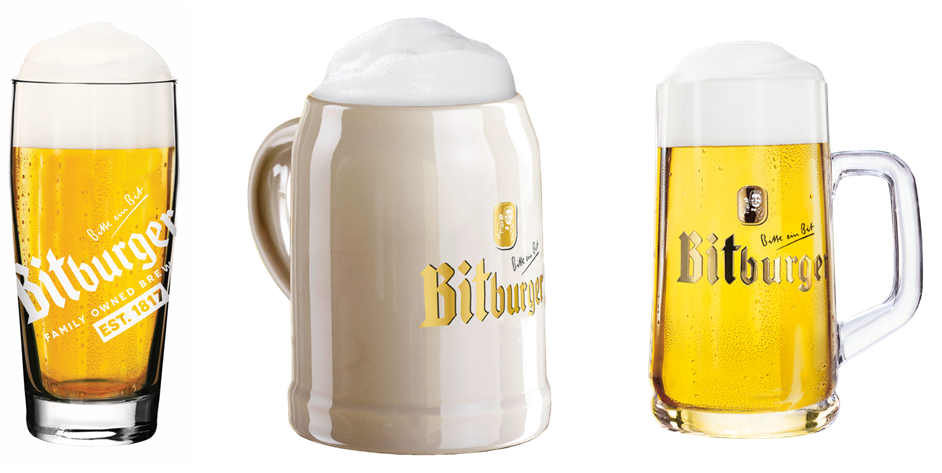
Bitburger is not a one-trick pony with their drinkware though. They offer a variety of other vessels, including workhorses like the Willi Becher and the Keferloher stein. Those are two of my absolute favorites styles, in part, because of their subtlety. However, next to the pokal, the other standout vessel is the handled glass mug.
Alas, for the big watch party at the House of Soccer, plastic cups were the practical choice. And I totally got that and had no problem with it at all. It was a great time and despite being behind most of the match, Germany ultimately defeated the Ivory Coast with a final score of 2-1.
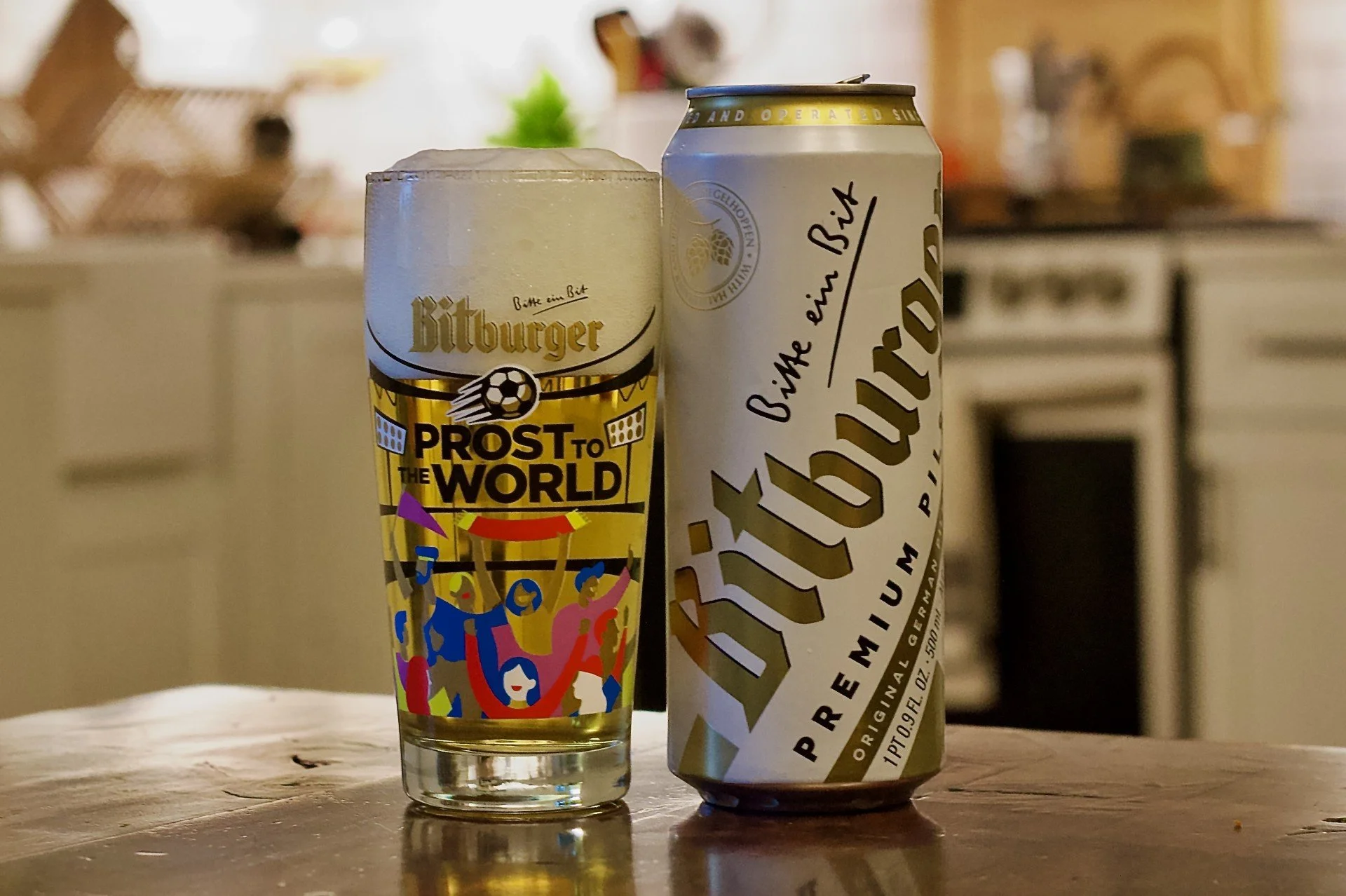
The icing on the cake came in the bag I was handed on my way out the door. Inside was a commemorative 0.3L Rastal Willi Becher. It’s the precise style and size of glass I typically use when having a lager at home. It didn’t take me long to do just that, with a Bitburger, of course. Bitte ein Bit!
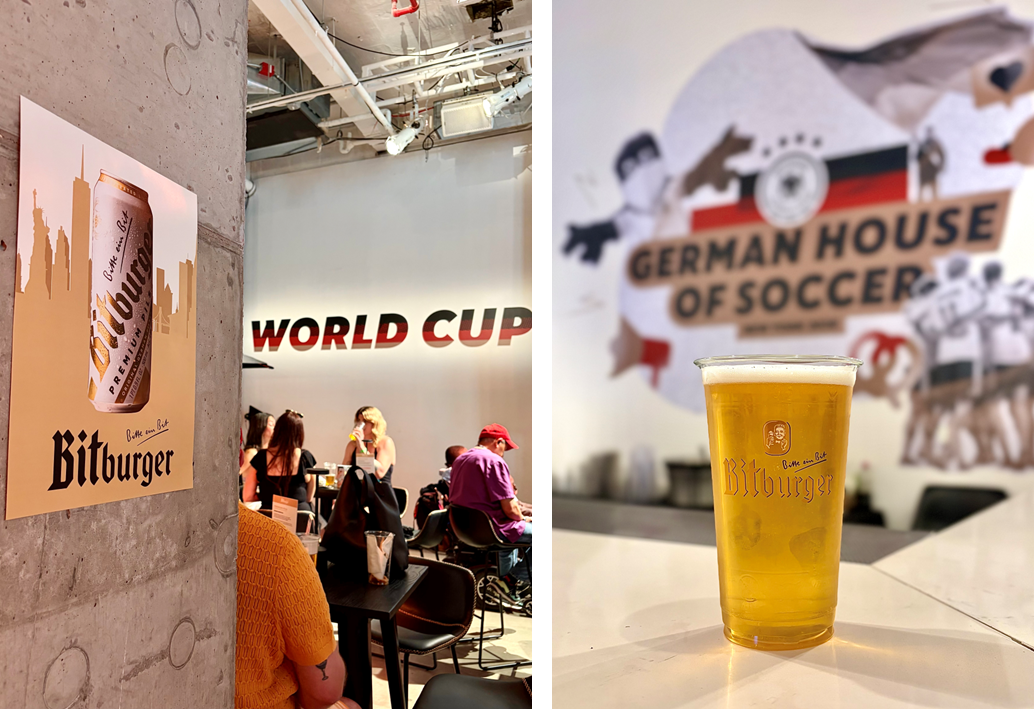
The Bitburger event at the German House of Soccer in New York, NY.