
Drinkware Notes from Munich
The last time I was in Munich, I wasn’t as obsessed with drinkware as I am now. This time around, I paid a bit more attention and found that everything was, for the most part, on the up and up.
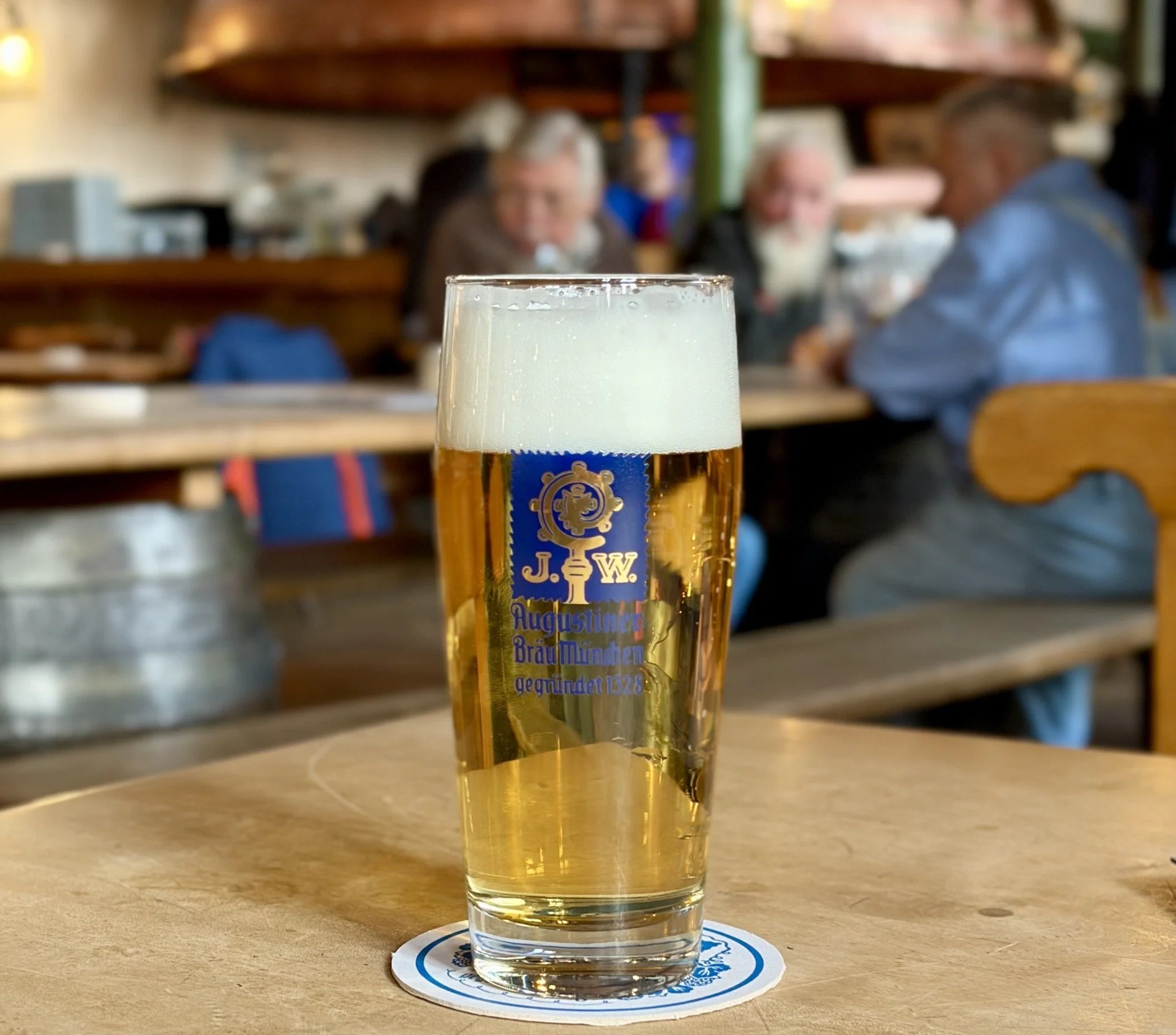
In particular, my vessel of choice, the Willi Becher, seemed to be the most widely used glass around town. It’s commonly used at breweries, bars, and restaurants.
But I also love a keferloher. The utilitarian yet elegant stein is in regular use in Bavaria for half and full liter pours. I had a half-liter from a freshly tapped wooden keg (i.e. vom holzfass) at Ayinger am Platzl in one. It would’ve been fine in a Willi Becher, but the handled ceramic mug made it better.
This was also the case when I attended Starkbierfest at Paulaner am Nockherberg and had an obligatory liter of Doppelbock. A one-liter glass mug wouldn’t have felt out of line in Munich, but unlike Oktoberfest, everyone uses a keferloher at Starkbierfest. It’s part of why the lesser-known beer fest may be better than the one held in October. And September.
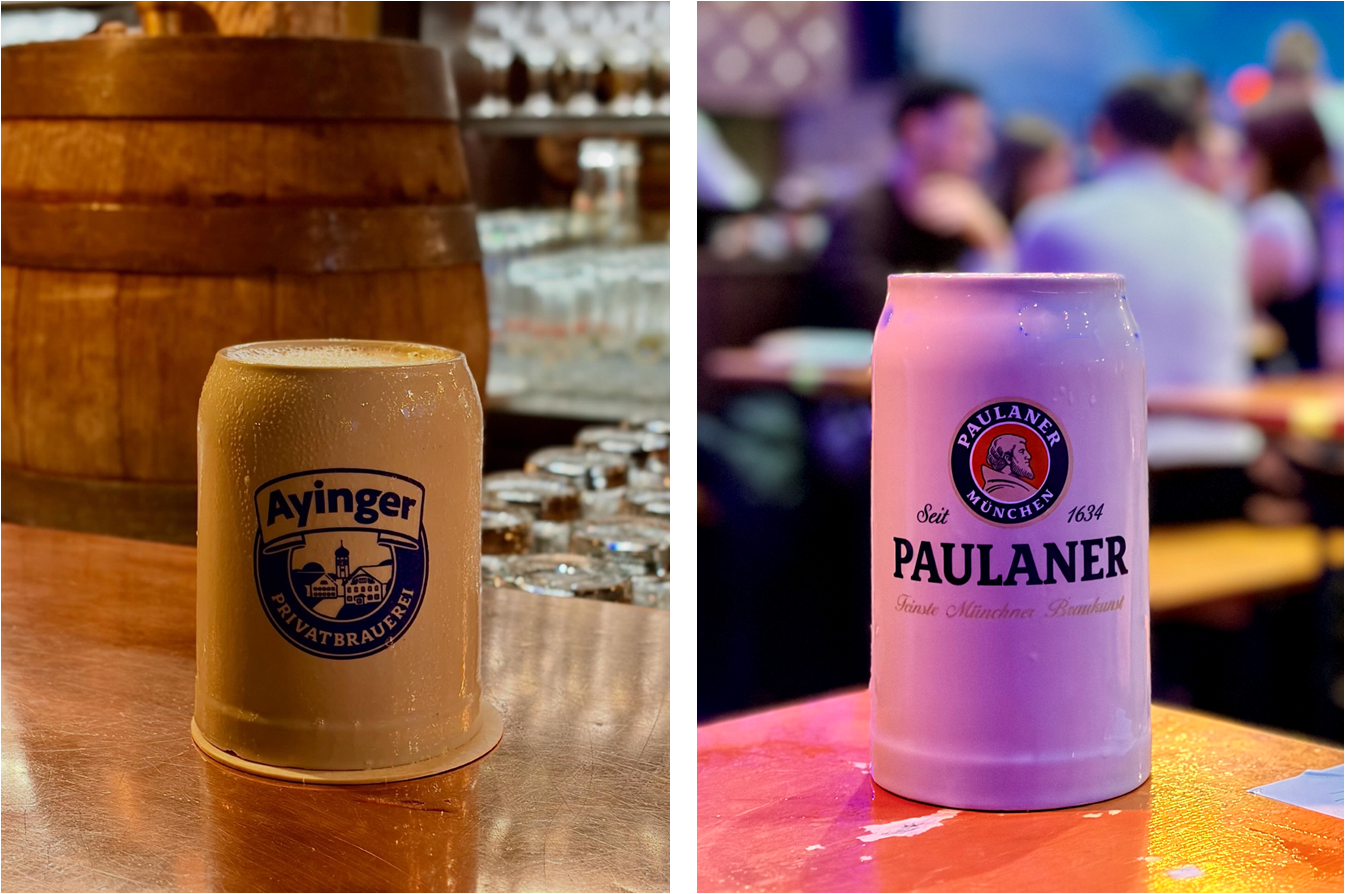
Two Keferloher mugs. On the left, a half-liter at Ayinger am Platzl. On the right a liter at Starkbierfest, celebrated at Paulaner am Nockherberg.
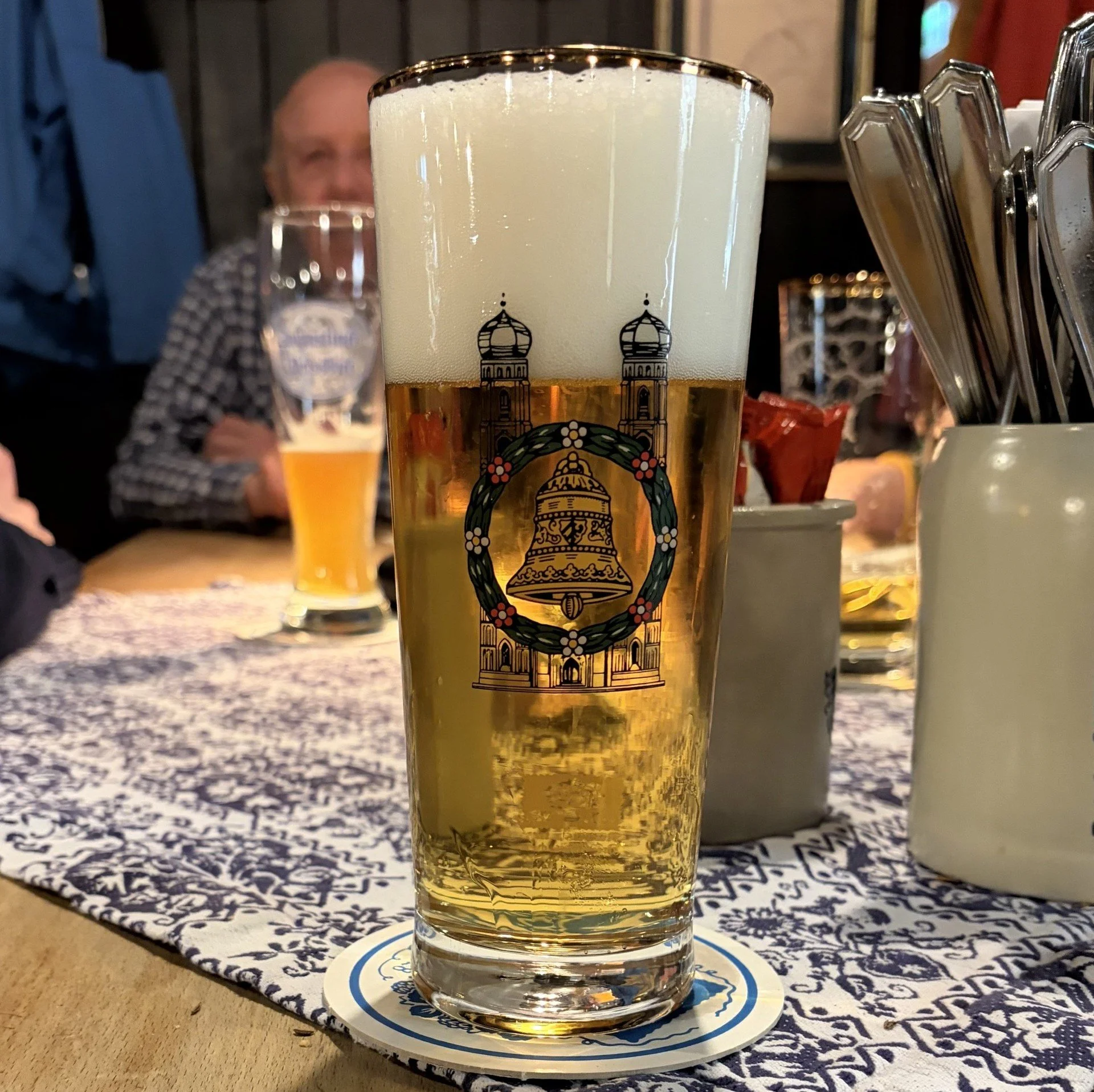
The first beer I had in town was an incredibly tasty Augustiner Helles vom Holzfass served in a gold-rimmed, conical glass. This was at Nürnberger Bratwurst Glöckl am Dom. Though I have no issue with the glass, I’d prefer a Willi Becher.
The thing about this glass, though, is that I’m sure the shaker pint haters of the world would drink this beer without batting an eyelash, despite similarities between the two. The reason is that at the end of the day, the shaker isn’t the villain many in the beer world like to make it out to be.
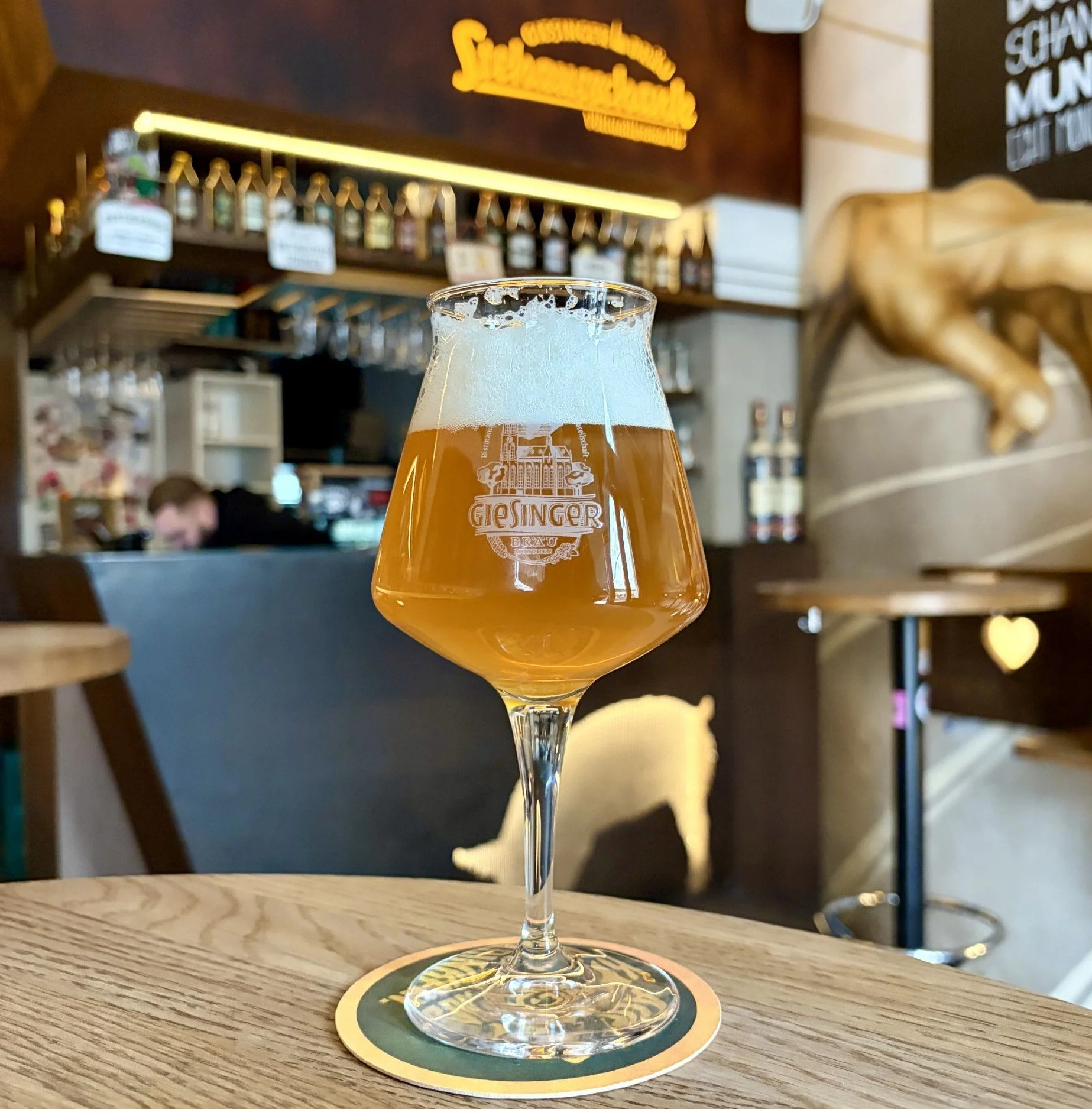
Speaking of controversial glasses, I was a bit surprised when I was served a Schankbier in a Teku glass at a Giesinger Bräu standing bar (Stehausschank). The simple, low-ABV lager would have been perfectly paired with a Willi Becher. It felt out of place in the showy Teku.
I appreciate Giesinger’s subtle injections of modernity in Munich beer culture, but this particular gesture was off the mark for me. Nonetheless, it was an absolutely delicious beer, and I wish we saw more beers like this in the US.
Back to the traditional drinkware. This time with a beer and corresponding glass that aren’t go-tos for me: Hefeweizen. However, I appreciate it and I’m a sucker for tradition. So, the traditional Weisswurst breakfast (Weisswurstfrühstück) at Schneider’s Weisses Bräuhaus im Tal, paired with their Original Hefeweizen in a proper weizen glass, helped nurse a pedantic beer nerd’s hangover.
Ensuring I had made my best efforts to curb my hangover, I strolled two blocks from Weisses to Hofbräuhaus after breakfast to check in on their drinkware selection. If you’re coming from a Weisswurst breakfast, it’s early enough to avoid the crowds at “the world’s most famous tavern.”
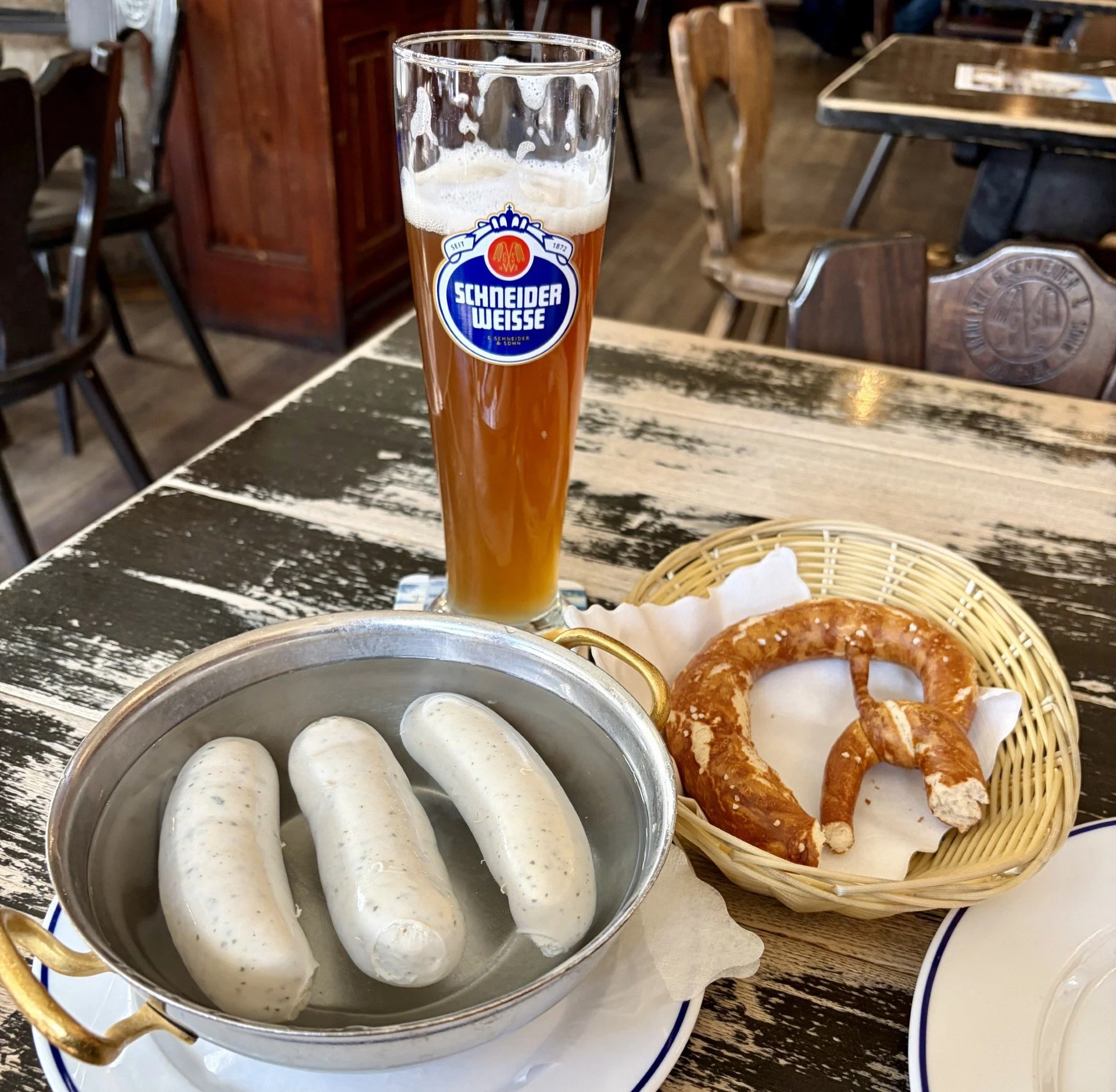
Traditional Weisswurst breakfast (Weisswurstfrühstück) at Schneider’s Weisses Bräuhaus im Tal including weisswurst, a pretzel and a Weissbier in a proper weizen glass.
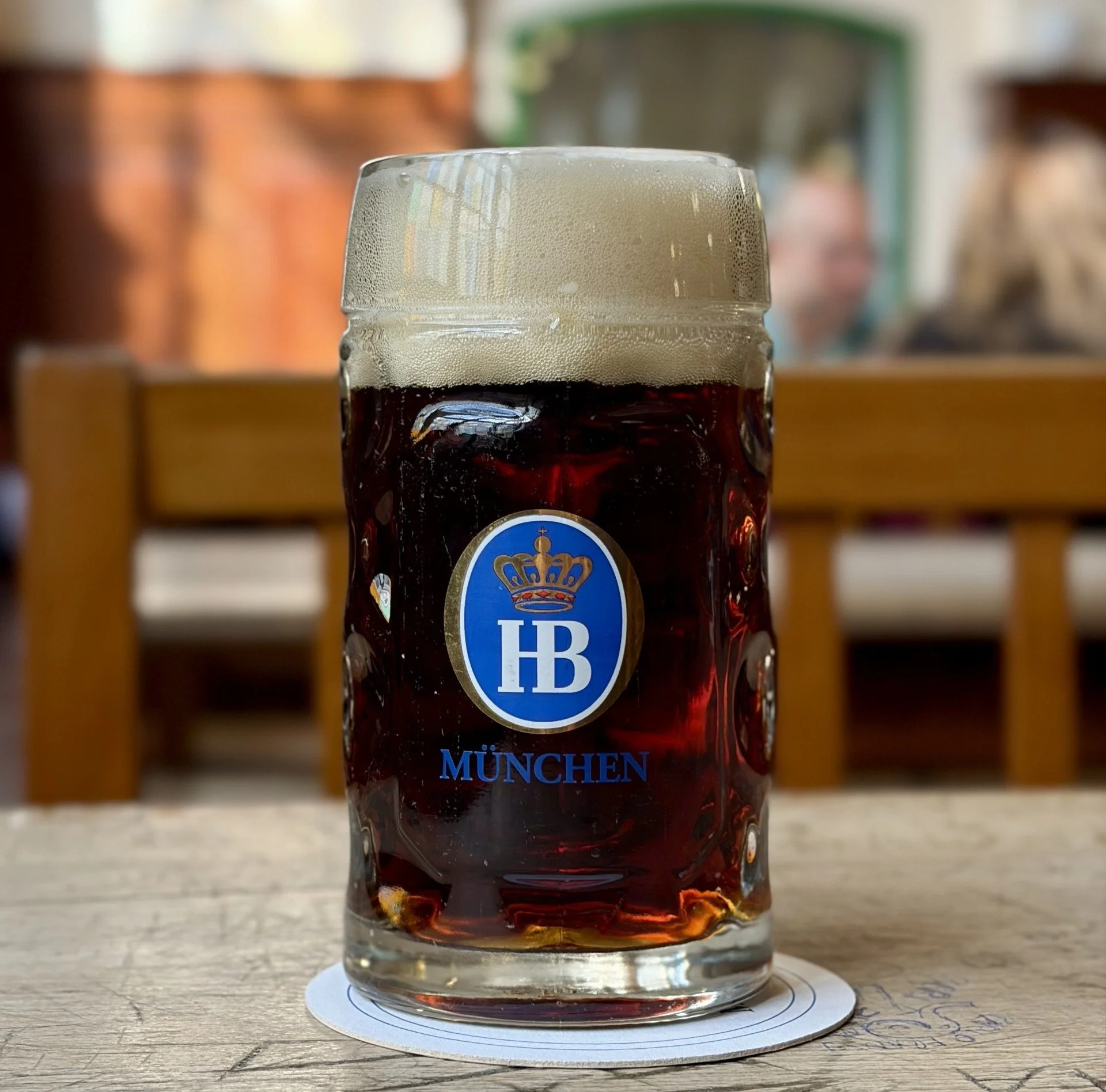
A Dunkel beer at Hofbräuhaus in Munich, served in a half liter Isar mug.
My half-liter Dunkel arrived in an Isar mug. The dimpled glass mug widely associated with Oktoberfest (though typically in one-liter format at that event) is named after the river that cuts through the city. Though this is also not my favorite vessel, I was very content to have it in the place where it got its name.
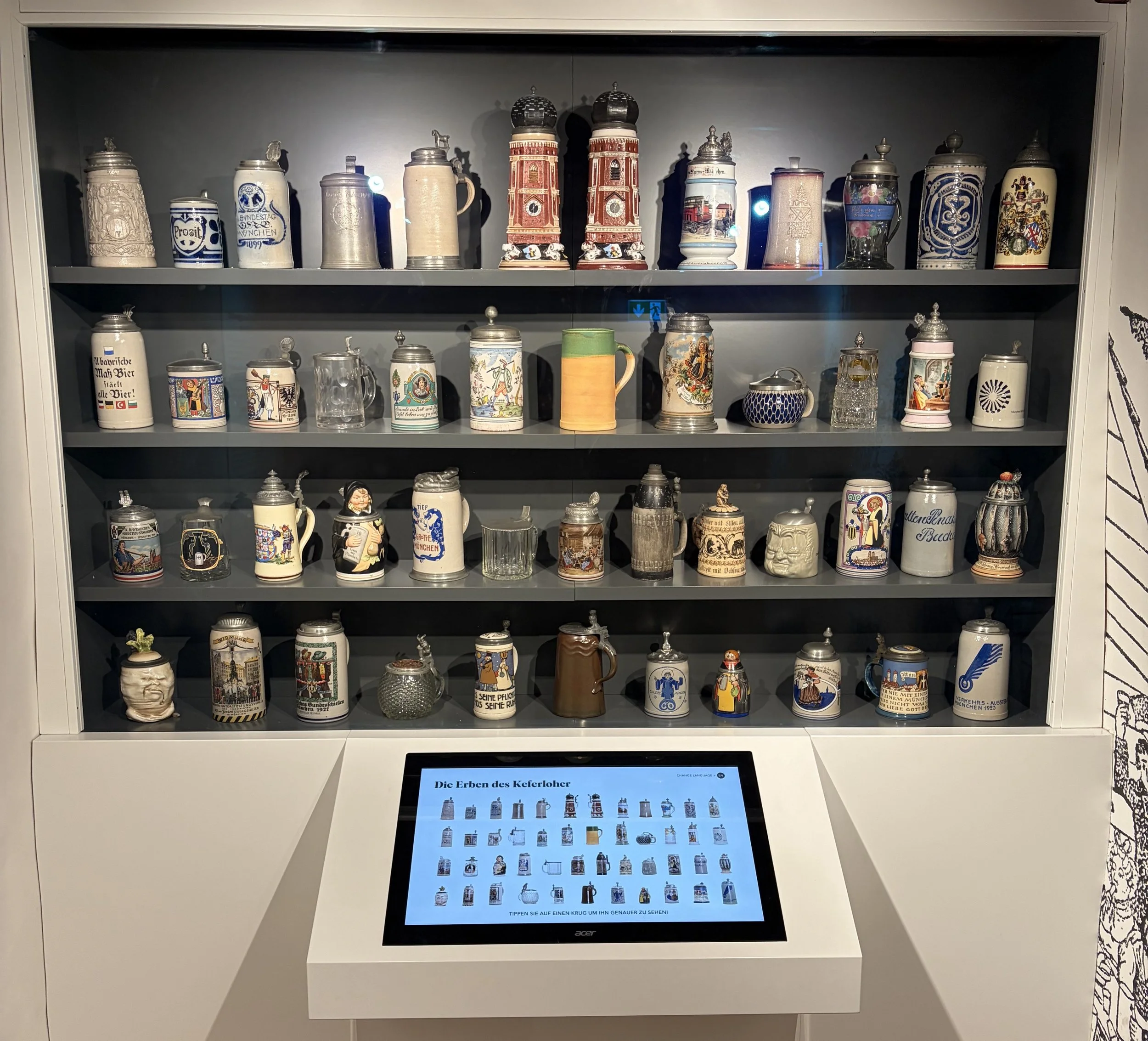
Finally, a highlight of the visit was a stop at the Beer and Oktoberfest Museum. The museum is an excellent short stop for beer nerds visiting the city, and it’s packed with tons of informative, fascinating bits of drinkware history, among other things.
Here are some of my favorite parts of the collection:
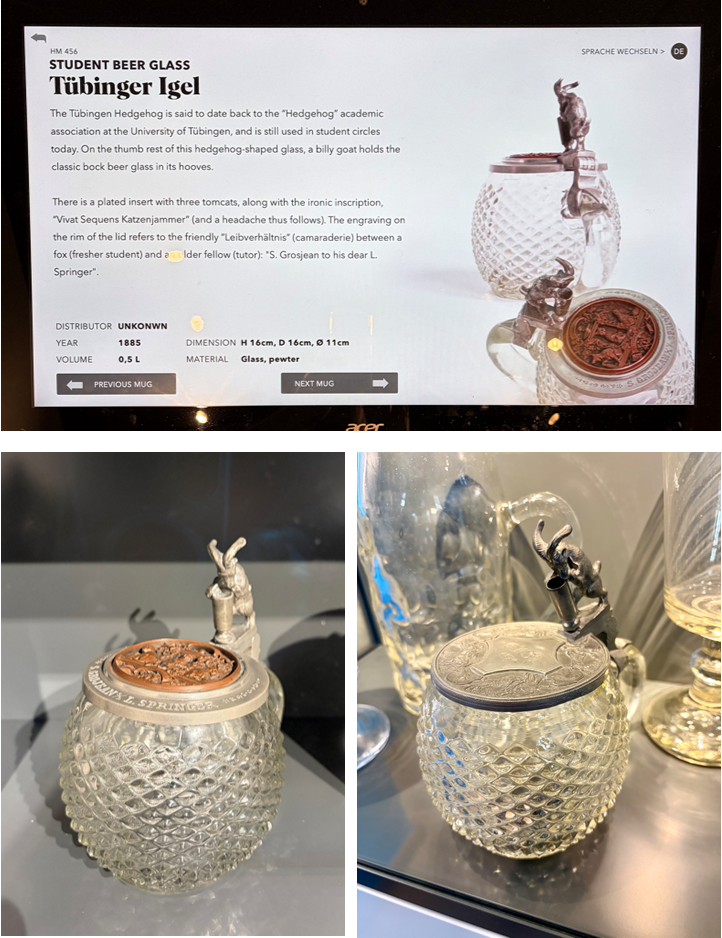
Top image is a screenshot from the Beer and Oktoberfest Museum describing the Tübinger Igel mug, followed by two examples. The mug’s texture is hedgehog like (Igel meaning hedgehog). Modern Tübinger mugs are called Tübinger Kugel, with Kugel referring to the dimples. Note the billy goat drinking from a pokal glass on the lid (though, not all Igel mugs had this style lid.)
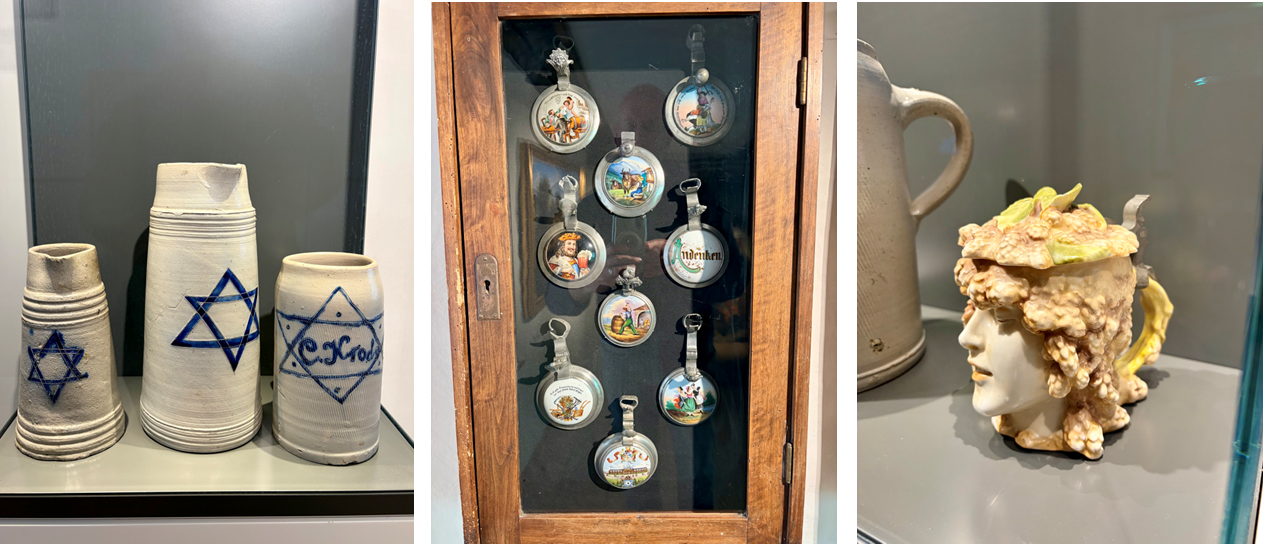
On the left: Three stone mugs depicting the brewer’s star, a symbol of protection used in ancient times and believed to help ensure a good brew. Also later used by zoigl houses to indicate that beer was available for the public. In the middle: A variety of porcelain and pewter beer mug lids. On the right: the Queen of Hops, a porcelain and pewter, hand-painted mug.
That’s it for Bavaria. Next stop, the Czech Republic as a few folks DM’d me about the new Budvar/Baladin Teku mugs that were released by Rastal while I was away. I was originally going to include some thoughts on that here, but I’m going to save it for another brief post on Czech drinkware.