Posts tagged #properglassware
Checking in on Czech Drinkware
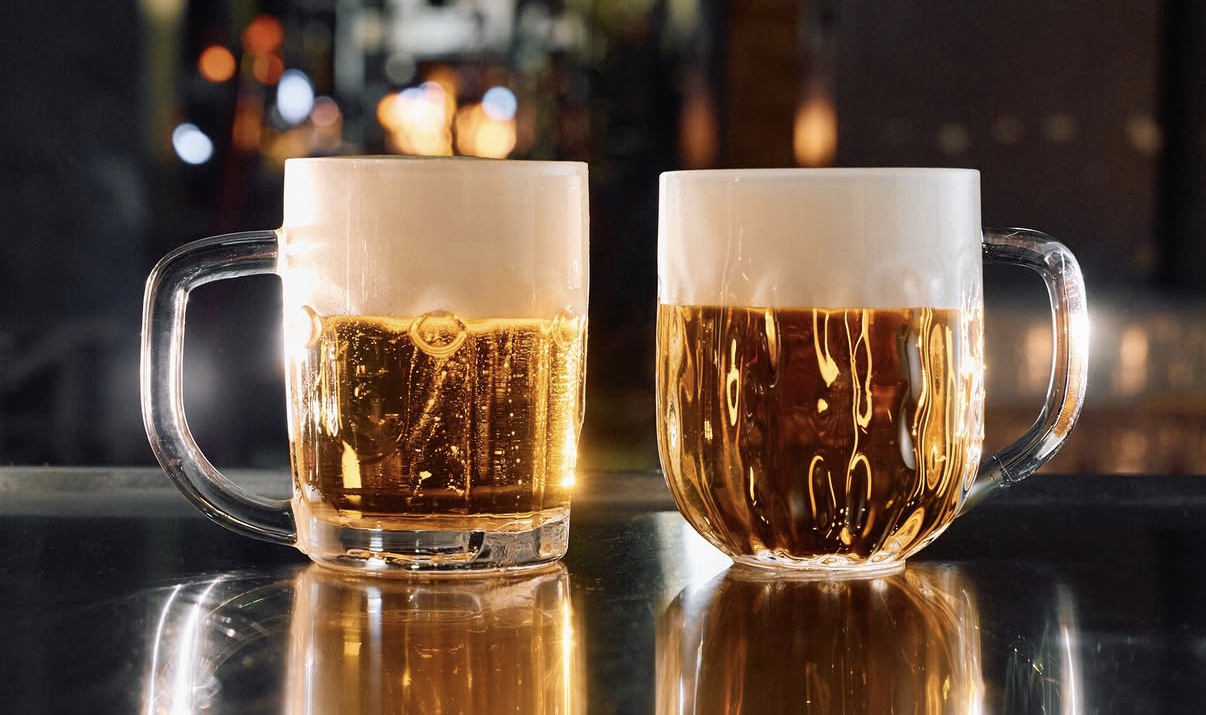
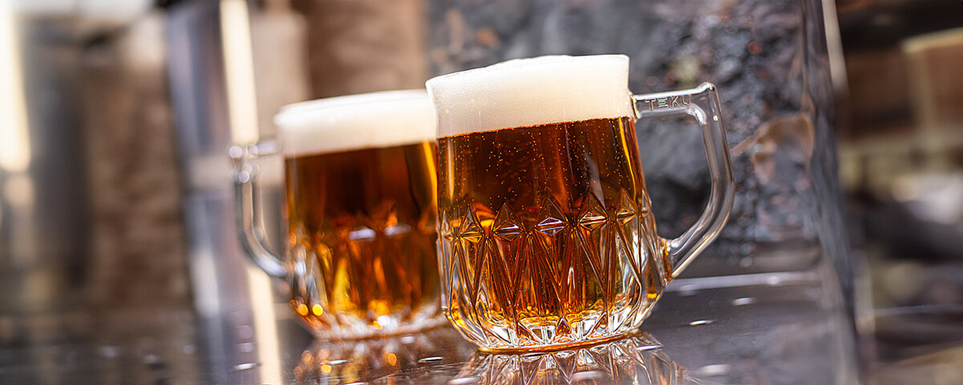
Two Rastal Teku mugs filled with beer.

Teku mug by Rastal. Image source: Rastal.

I felt a bit validated about my drinkware niche when several people DM’d me regarding a new beer mug released by Rastal. According to their website:

To mark the 20th anniversary of the iconic Teku glass, RASTAL is expanding the range with the new Teku Mug – a modern lager glass inspired by Bohemian beer culture and designed by Teo Musso.

(For a quick background, the Teku glass was originally designed in collaboration with Teo Musso, the founder of Birra Baladin in Italy.)

While the Teku inspiration is clear, the mug works better if you can disassociate it from the original stemmed glass. It has some baggage, with many turned off by its angular shape. I suspect this mug will be less divisive.

A joint Budvar/Baladin post on social media puts a different spin on the purpose of the mug. It claims to have been created to celebrate the release of “Alla Ceca”, a new collab beer made by the two breweries. It’s the first lager ever brewed by Baladin.

The overall shape feels less angular than the stemmed version, and the diamond pattern gives a nice nod to the Czech heritage of crystal production, though it is a bit posh. Nonetheless, the mug is successful in conveying a Czech lager aesthetic.

One anomaly to note is its 0.4L size. I mentioned in my last post on Czech drinkware that some places were serving beers in this size. However, it doesn’t seem like this has become common, and 0.3L and 0.5L sizes remain most typical for lager mugs.

Several years ago, Budvar had a big campaign surrounding the release of a different mug. So, it’s interesting to see this new gesture. It seems glassware is important to them, and it has made me wonder whether their efforts are inspiring others.

Aside from Budvar, Urquell, and Kozel, I didn’t mention other big breweries in my prior post. But since then, I’ve noticed efforts by Bernard and Krušovice.
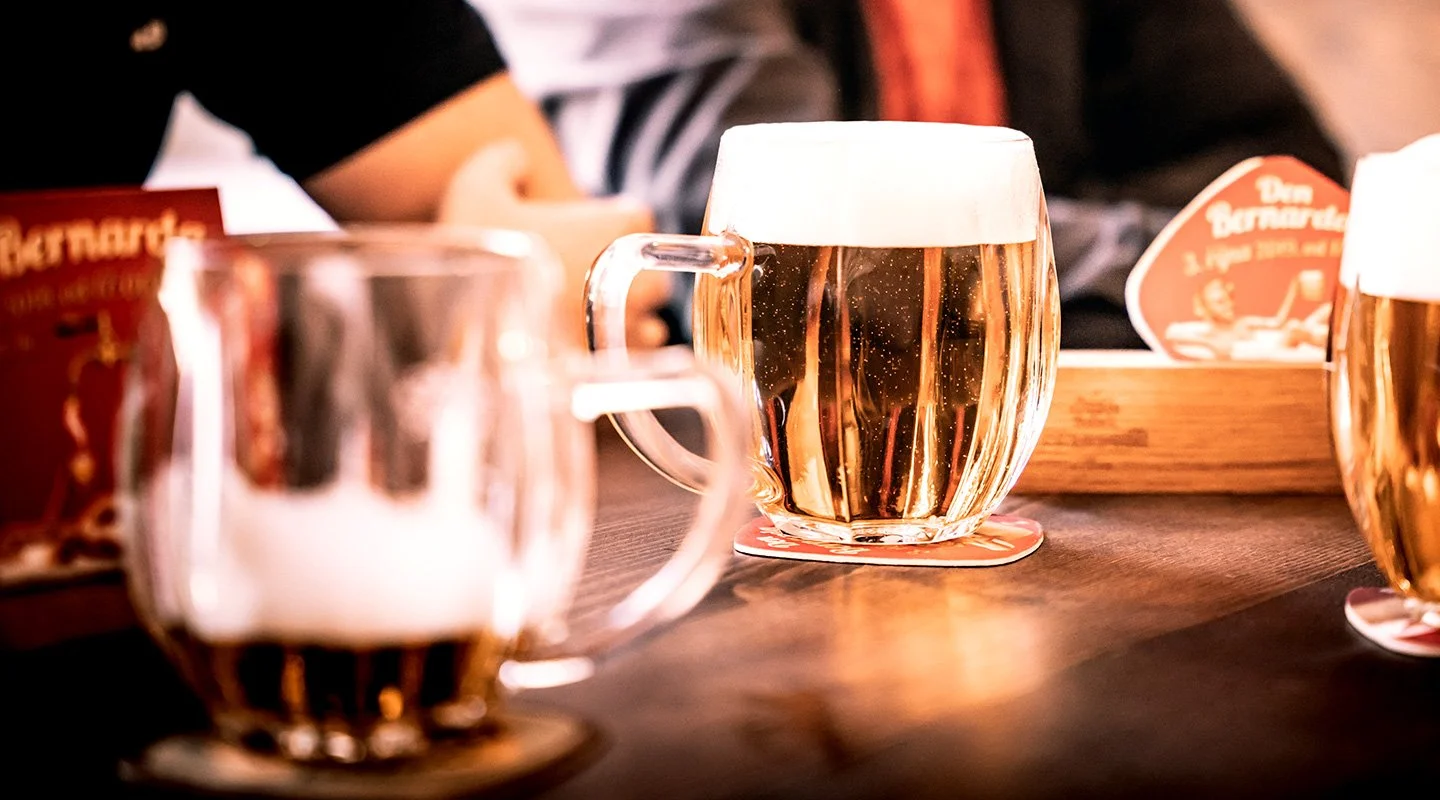
 
Karol Maier mug by Bernard.

Karol Maier mug by Bernard. Image source: Bernard.


I totally missed Bernard’s Karol Maier mug last time around.

Released in 2020 and manufactured by Sahm, the mug takes inspiration from one made over a century ago. The elegant vessel has a round shape, an embossed logo, and subtle waviness to it. I’m not terribly familiar with Bernard, and some of their marketing materials make me cringe, but I love this mug.

Krušovice launched a campaign for their new mug just last month. It’s another elegant glass, also embossed with its logo. There are similarities between it and the Bernard mug that are likely due to prominent glassware designer Rony Plesl being involved in the creation of both.  
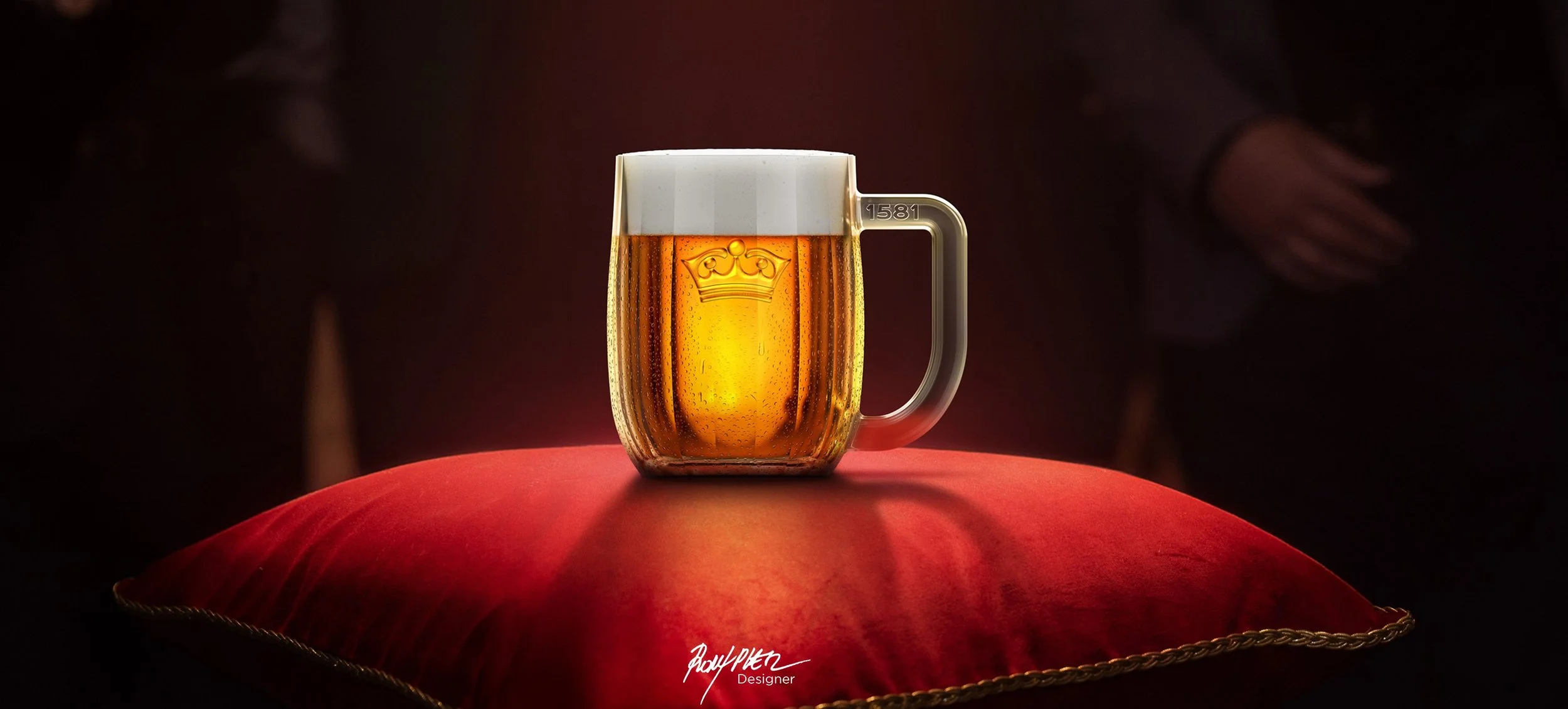
 
Krušovice beer in their new mug.

The new Krušovice mug. Image source: Krušovice.


Two different mugs of lager beer make for the Ambiente food and beverage group.

Two new lager mugs made for the Ambiente restaurant group. Image source: UMPRUM Praha Instagram page.
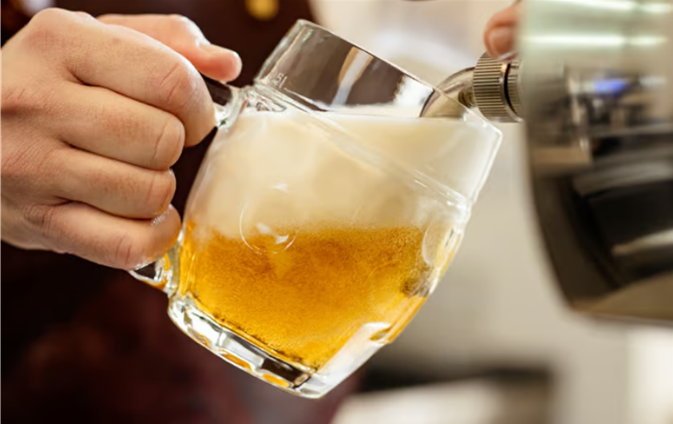
 
A beer being poured into a Tübinger mug at a Lokal pub.

A Tübinger mug at a Lokal pub. Image source: Lokal.

Aside from these historic beer institutions, younger ones are also making a statement when it comes to drinkware, especially those under the consistently growing Ambiente food and beverage empire. They just released two special mugs for select restaurants and Lokal beer bars.

In an Instagram post, they note, “Czech beer deserves Czech glassware: We are reviving the tradition of Czech crystal beer mugs.”

The mug designs came out of a collaboration between students at UMPRUM (the Academy of Arts, Architecture, and Design in Prague), BOMMA glassworks, the PIVO Institute, and Ambiente founder Tomáš Karpíšek. They’re elegant and contemporary, but built on a timeless aesthetic.

As production and distribution of these are limited, the Lokal pubs still make regular use of Tübinger mugs when serving lager, as many others do.
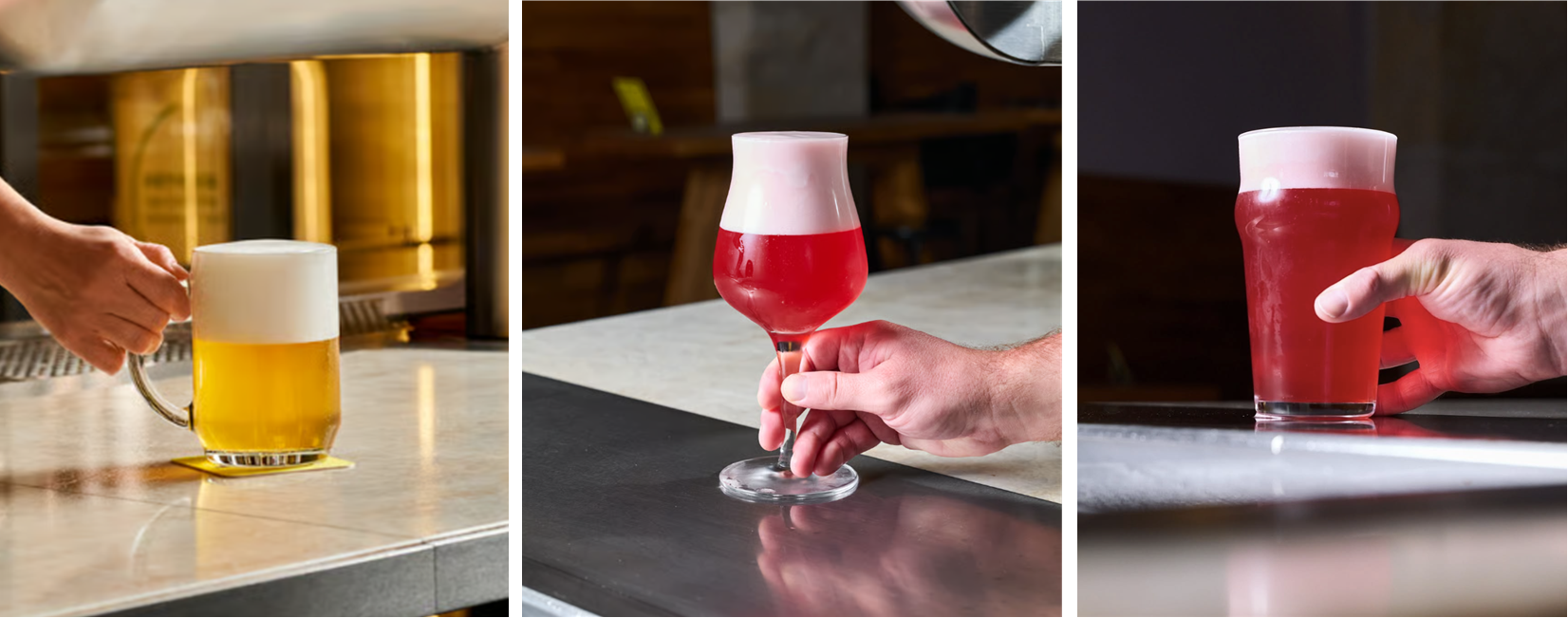
 
Three images of three different glasses at Pult. They include a lager mug on the left, a stemmed tulip glass in the middle, and a nonic on the right.

Three different types of glassware used by Pult in Prague. Image sources: Pult.


Pult is another contemporary beer bar under the Ambiente umbrella, and they haven’t changed much since my last post. They use the Ludwig mug by Sahm for lagers (one of my favorites) and a stemmed tulip glass for other beer. I have noticed they now also use nonics for ales and some other styles that don’t necessarily pair well with their other two glasses.

When serving lager, younger Czech breweries are using lager mugs. Reinforcing the Ambiente quote above, it appears there’s a general understanding that Czech lager belongs in a proper lager mug.

Some common ones that wouldn’t look out of place in an American taproom include Sahm’s Prag, Praha, and the previously mentioned Ludwig, as well as Rastal’s Bamberg mug.
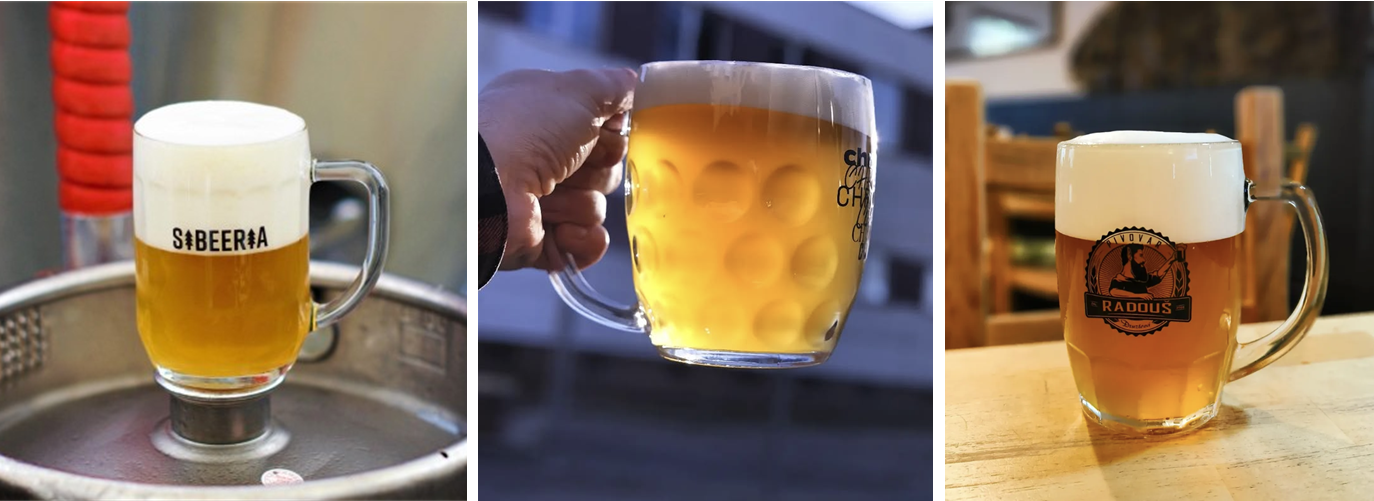
Three differrent lager mugs, including a Prag mug used by Siberia, a Praha mug used by Chroust and the Bamberg mug used by Radous.

Three differrent lager mugs, including a Prag mug used by Sibeeria, a Praha mug used by Chroust and the Bamberg mug used by Radous. Image sources: Sibeeria, Chroust, Radous.

 
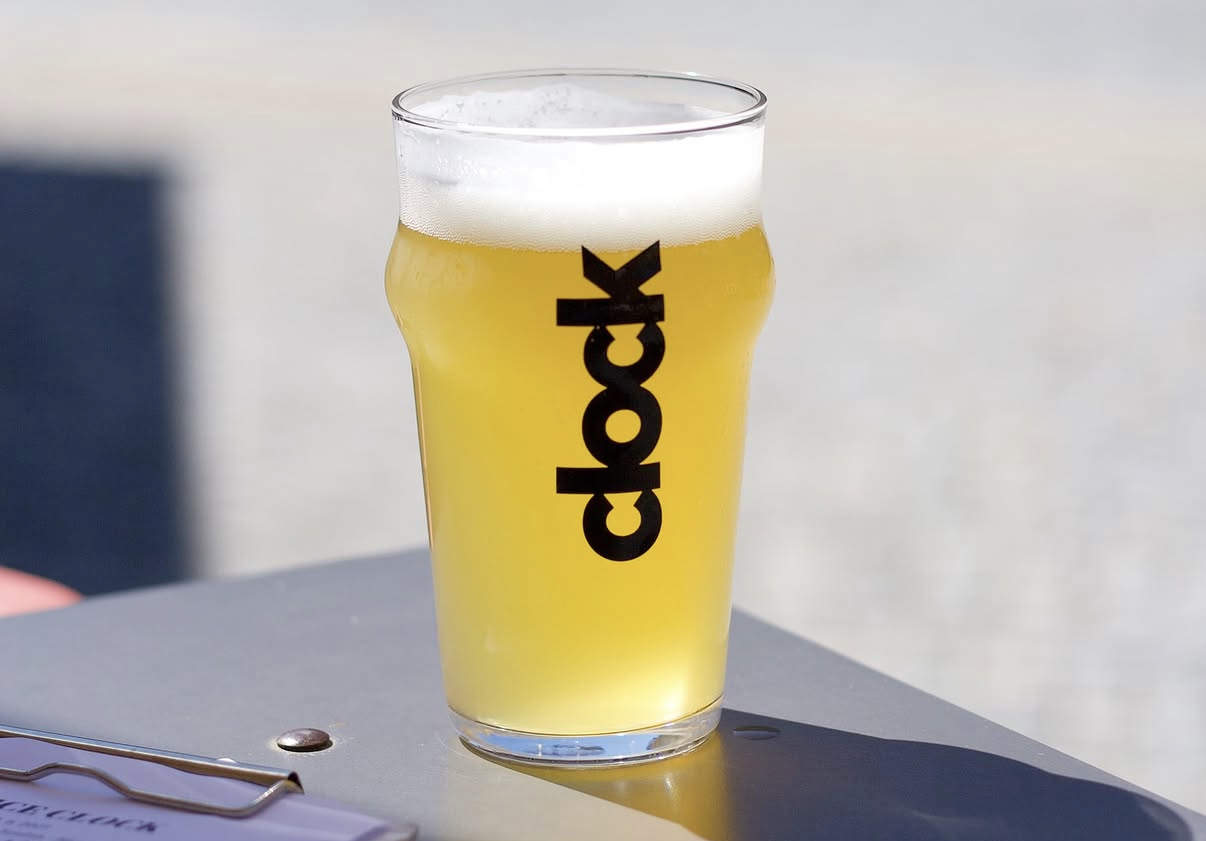
Pivovar Clock shaker pint.

Pivovar Clock nonic glass. Image source: Pivovar Clock.


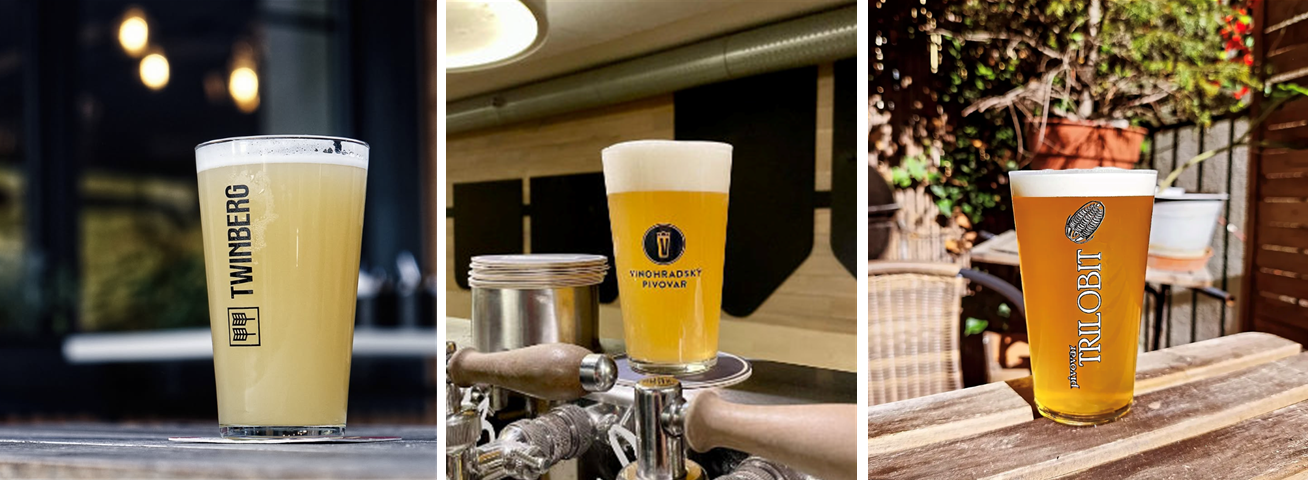
Three shaker pints. On the left, one from Twinberg, Vinohradský in the middle, and Trilobit on the right.

Three shaker pints from Czech breweries. Image sources: Twinberg, Vinohradský, Trilobit.


A handful of breweries use nonic glasses like Pult. The shaker pint is even being used (e.g., Vinohradsky, Zhurak, Trilobit, Twinberg). This may be disappointing for some, but I don’t think it’s anything to worry about.

Beyond lager, a variety of glassware choices are being embraced that are consistent with other contemporary breweries around the globe.
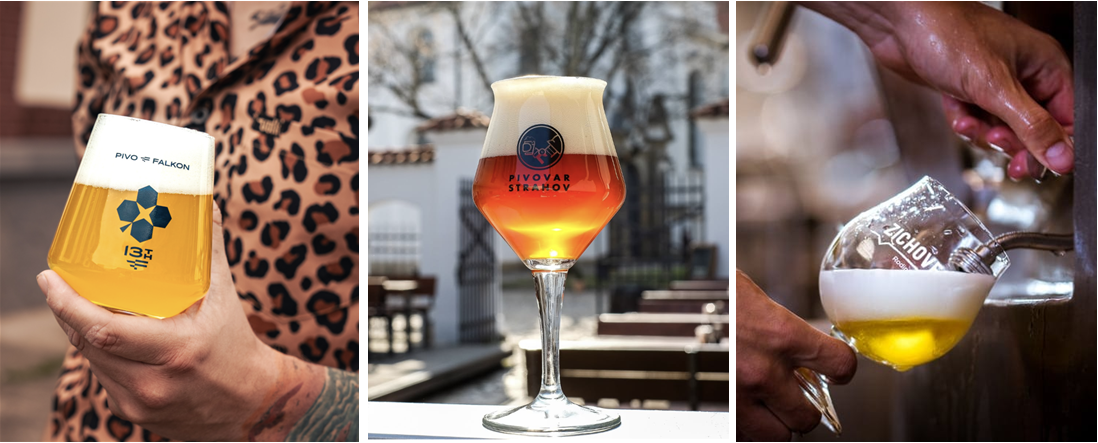
 
Three beer glasses from Czech breweries. On the left a modern tumbler by Pivo Falkon. In the middle, a tall, stemmed tulip glass by Pivovar Strahov. On the right, a more stout tulip glass by Pivovar Zichovec.

Three different beer glasses from contemporary Czech breweries. Image sources: Pivo Falkon, Pivovar Strahov, Pivovar Zichovec.


The good news is that it appears no one in the Czech Republic is taking cues from Dva Kohouti by using British dimple mugs for lager beer, unlike scores of US breweries. The Czech brewery finds the mug is versatile, supporting the diversity of beers they make (not just lager.) I can appreciate that, even though it wouldn’t be my pick.

Czech beer culture is inclusive of both tradition and modernity at the moment. This is in contrast to Bavaria, where I recently experienced their stubborn adherence to tradition (and I’m certainly not hating on them for that). In the Czech Republic, drinkware continues to be dynamic, built on a reputable history, and fully embracing the present.
Drinkware Notes from Munich

The last time I was in Munich, I wasn’t as obsessed with drinkware as I am now. This time around, I paid a bit more attention and found that everything was, for the most part, on the up and up.

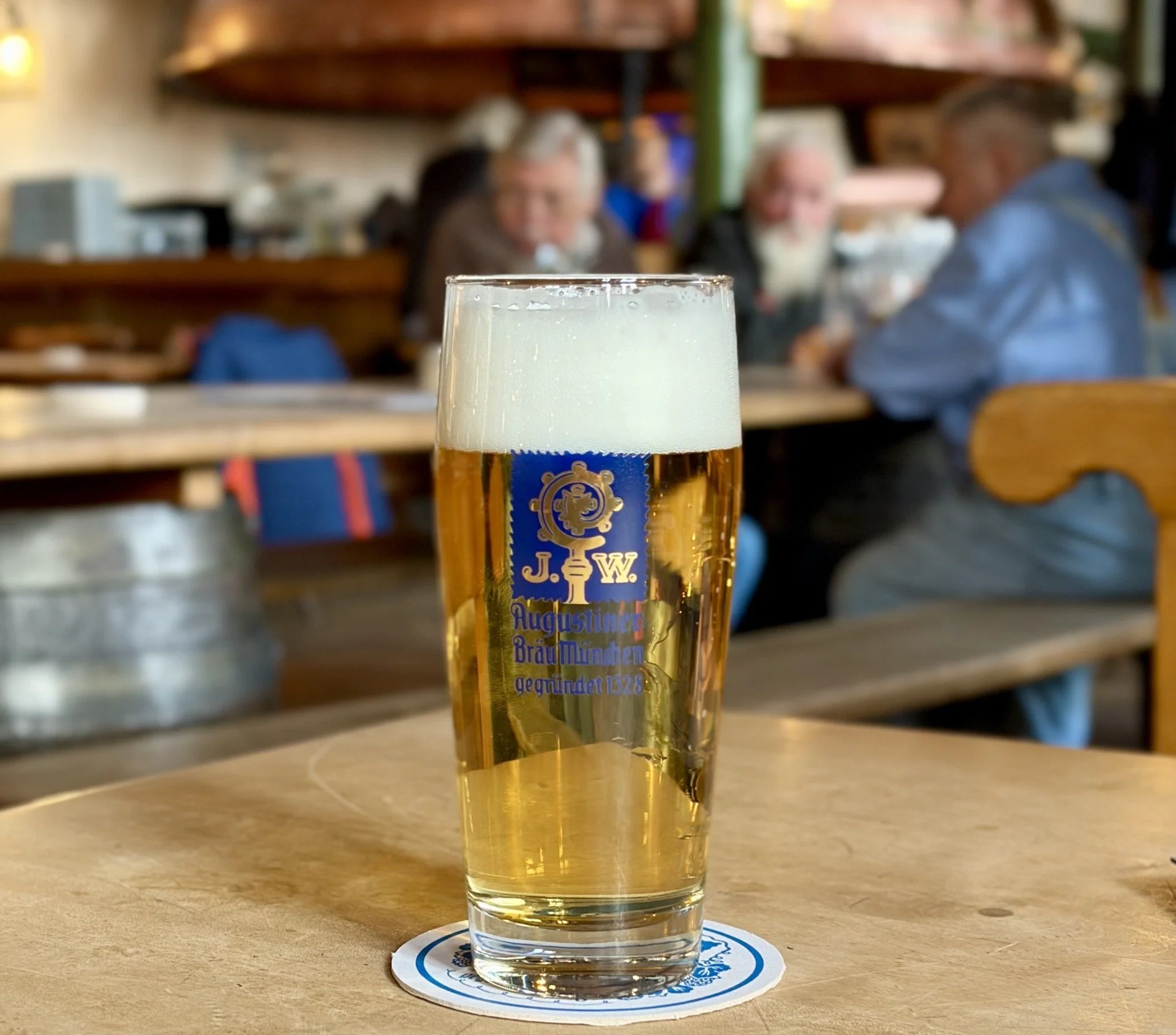
In particular, my vessel of choice, the Willi Becher, seemed to be the most widely used glass around town. It’s commonly used at breweries, bars, and restaurants.

 
A half liter glass of Augustiner Helles.

A half-liter of Augustiner Helles in a Willi Becher glass at Augustiner Bräustuben.


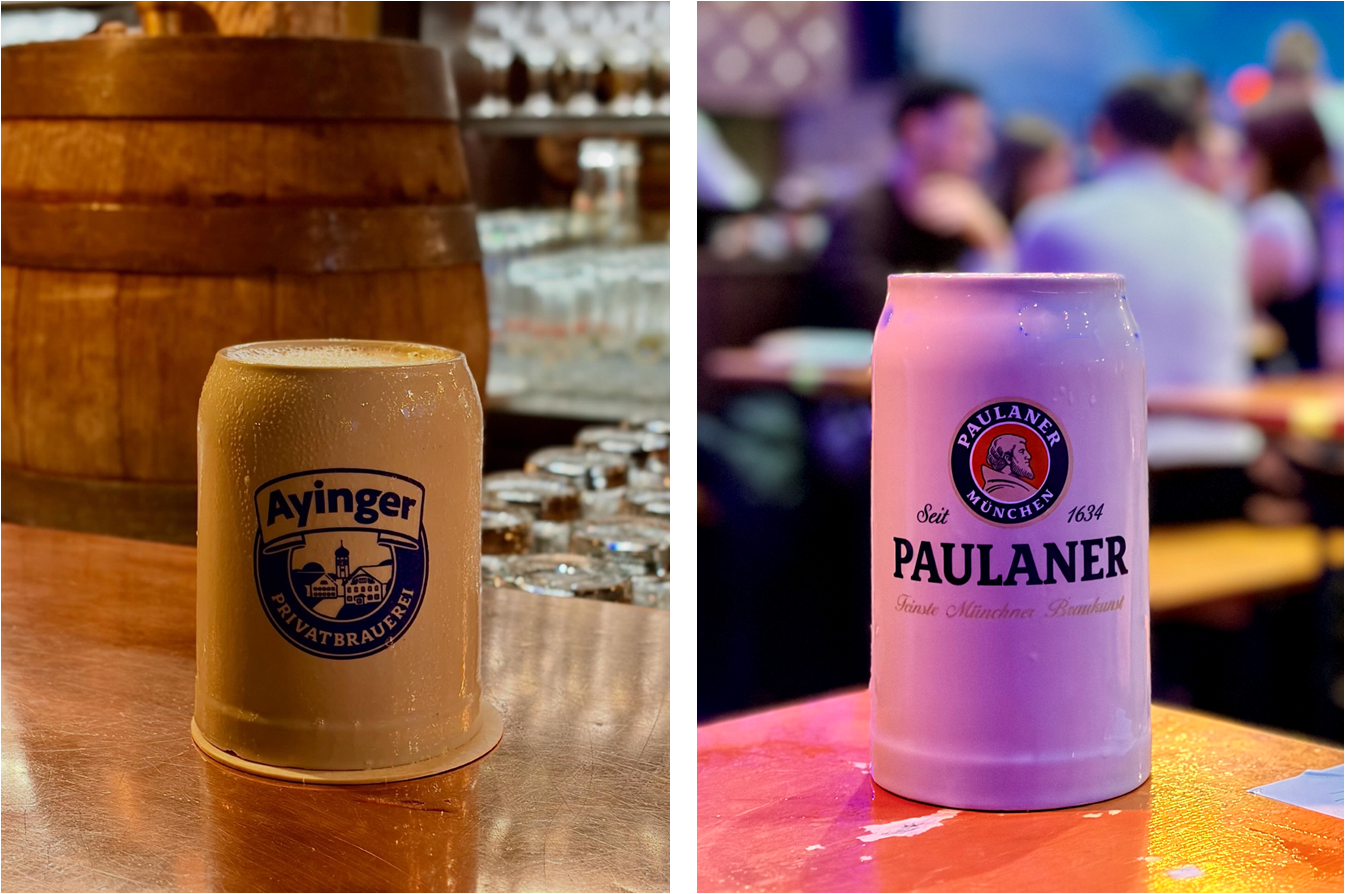
But I also love a keferloher. The utilitarian yet elegant stein is in regular use in Bavaria for half and full liter pours. I had a half-liter from a freshly tapped wooden keg (i.e. vom holzfass) at Ayinger am Platzl in one. It would’ve been fine in a Willi Becher, but the handled ceramic mug made it better.

This was also the case when I attended Starkbierfest at Paulaner am Nockherberg and had an obligatory liter of Doppelbock. A one-liter glass mug wouldn’t have felt out of line in Munich, but unlike Oktoberfest, everyone uses a keferloher at Starkbierfest. It’s part of why the lesser-known beer fest may be better than the one held in October. And September.

 
Two images of Keferloher style mugs. One the left is a half liter one in front of a wooden keg at Ayinger am Platzl. On the right is a liter mug at Starkbierfest celebrated at Paulaner am Nockherberg. other

Two Keferloher mugs. On the left, a half-liter at Ayinger am Platzl. On the right a liter at Starkbierfest, celebrated at Paulaner am Nockherberg.


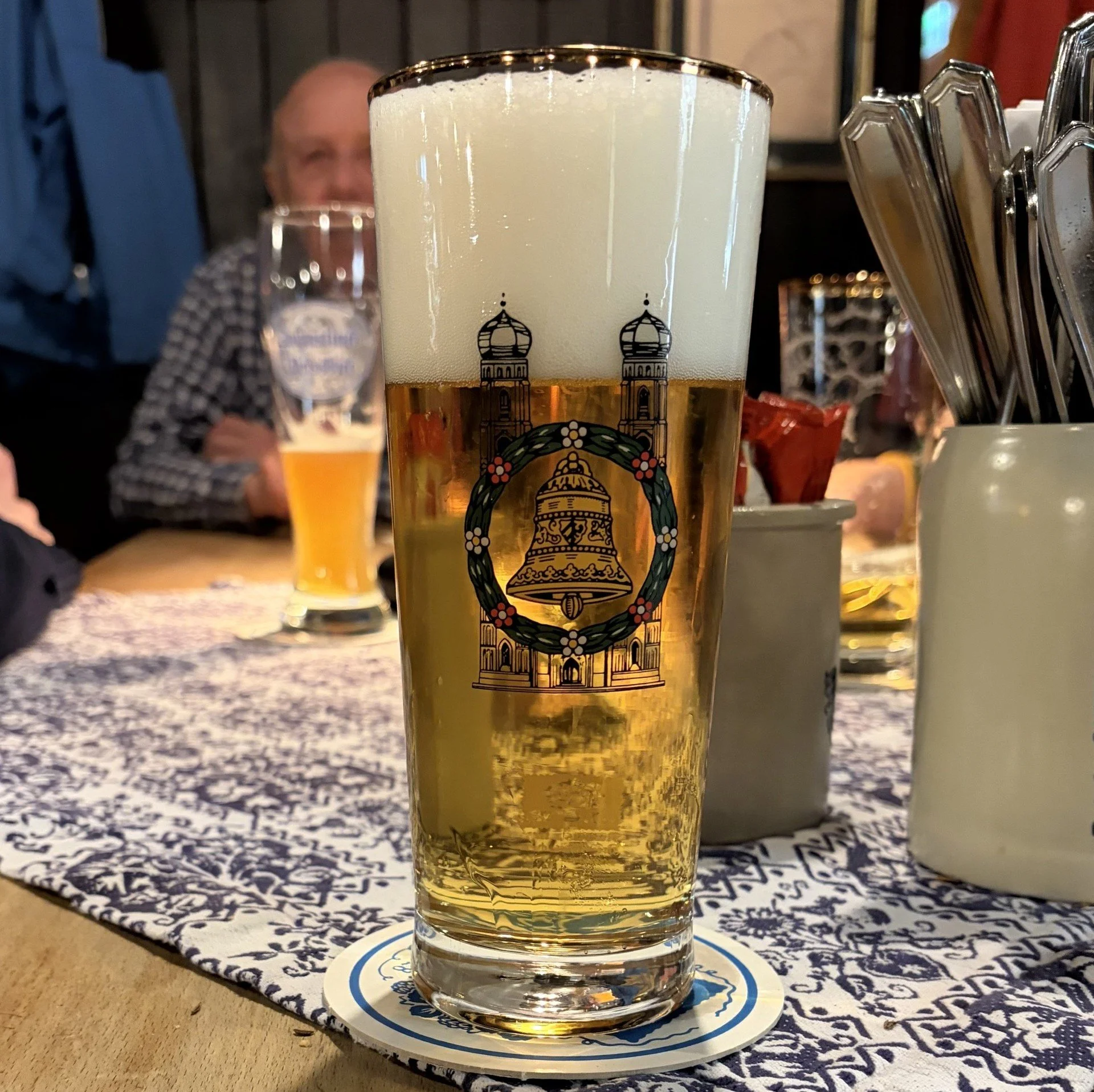
The first beer I had in town was an incredibly tasty Augustiner Helles vom Holzfass served in a gold-rimmed, conical glass. This was at Nürnberger Bratwurst Glöckl am Dom. Though I have no issue with the glass, I’d prefer a Willi Becher.

The thing about this glass, though, is that I’m sure the shaker pint haters of the world would drink this beer without batting an eyelash, despite similarities between the two. The reason is that at the end of the day, the shaker isn’t the villain many in the beer world like to make it out to be.

 
Conical glass of Helles at Nürnberger Bratwurst Glöckl am Dom.

A conical glass of Augustiner Helles at Nürnberger Bratwurst Glöckl am Dom.


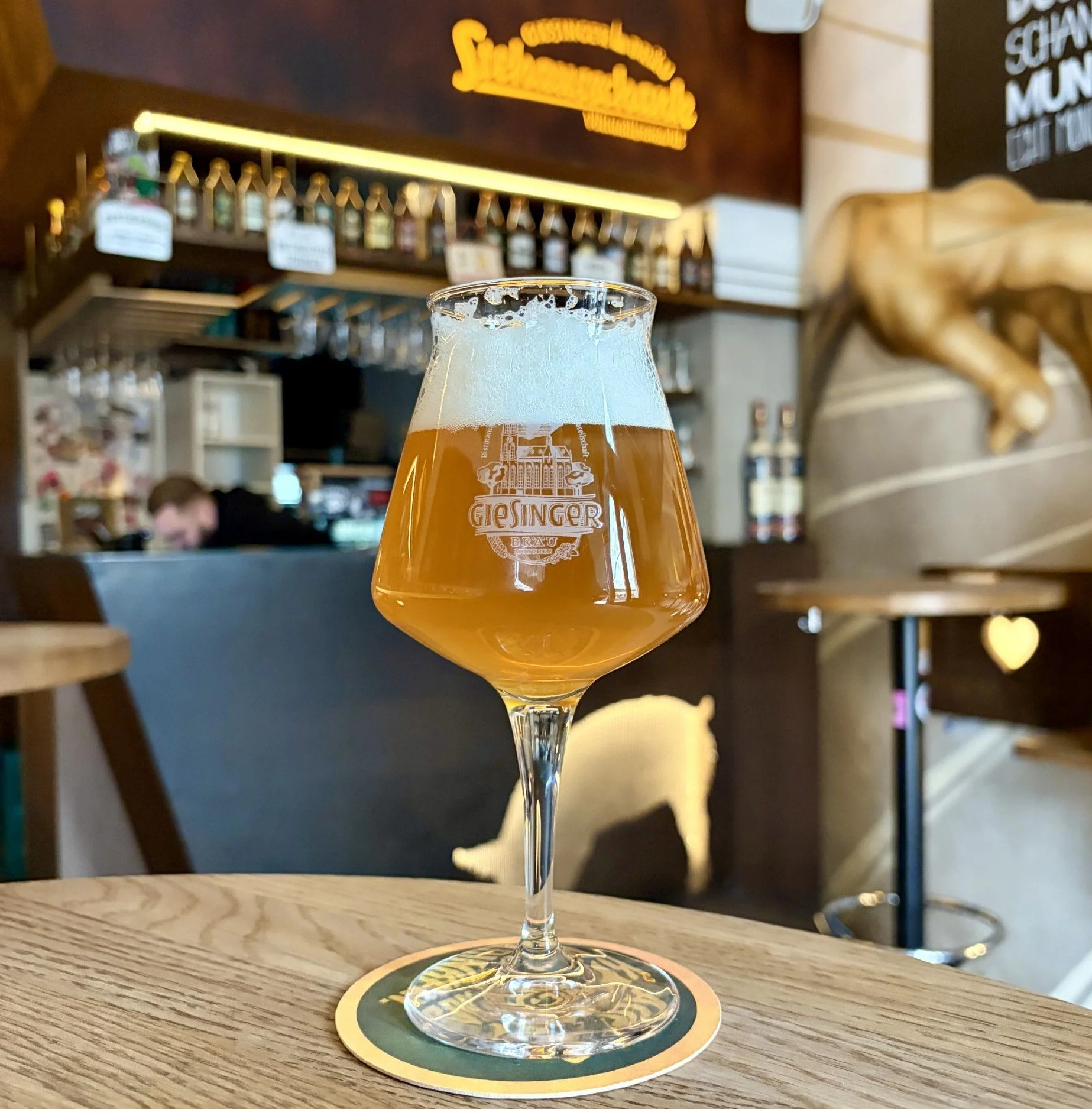
Speaking of controversial glasses, I was a bit surprised when I was served a Schankbier in a Teku glass at a Giesinger Bräu standing bar (Stehausschank). The simple, low-ABV lager would have been perfectly paired with a Willi Becher. It felt out of place in the showy Teku.

I appreciate Giesinger’s subtle injections of modernity in Munich beer culture, but this particular gesture was off the mark for me. Nonetheless, it was an absolutely delicious beer, and I wish we saw more beers like this in the US.

 
Lager beer served in a Teku glass at a Giesinger standing bar (Stehausschank).

Lager beer served in a Teku glass at a Giesinger standing bar (Stehausschank).


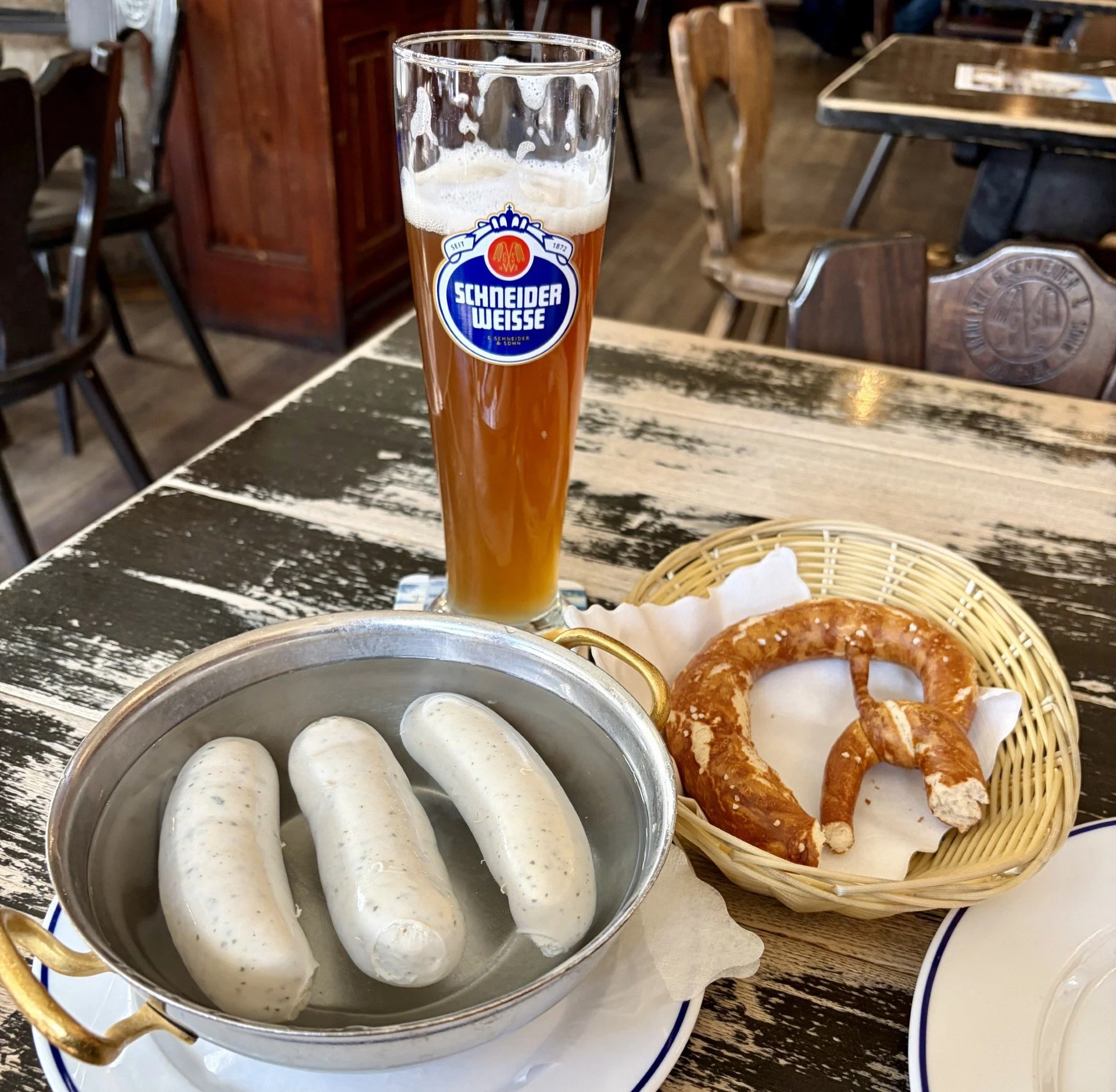
Back to the traditional drinkware. This time with a beer and corresponding glass that aren’t go-tos for me: Hefeweizen. However, I appreciate it and I’m a sucker for tradition. So, the traditional Weisswurst breakfast (Weisswurstfrühstück) at Schneider’s Weisses Bräuhaus im Tal, paired with their Original Hefeweizen in a proper weizen glass, helped nurse a pedantic beer nerd’s hangover.

Ensuring I had made my best efforts to curb my hangover, I strolled two blocks from Weisses to Hofbräuhaus after breakfast to check in on their drinkware selection. If you’re coming from a Weisswurst breakfast, it’s early enough to avoid the crowds at “the world’s most famous tavern.”

 
A proper weisswurst breakfast (Weisswurstfrühstück) with a weiss beer, pretzel and weisswurst.

Traditional Weisswurst breakfast (Weisswurstfrühstück) at Schneider’s Weisses Bräuhaus im Tal including weisswurst, a pretzel and a Weissbier in a proper weizen glass.

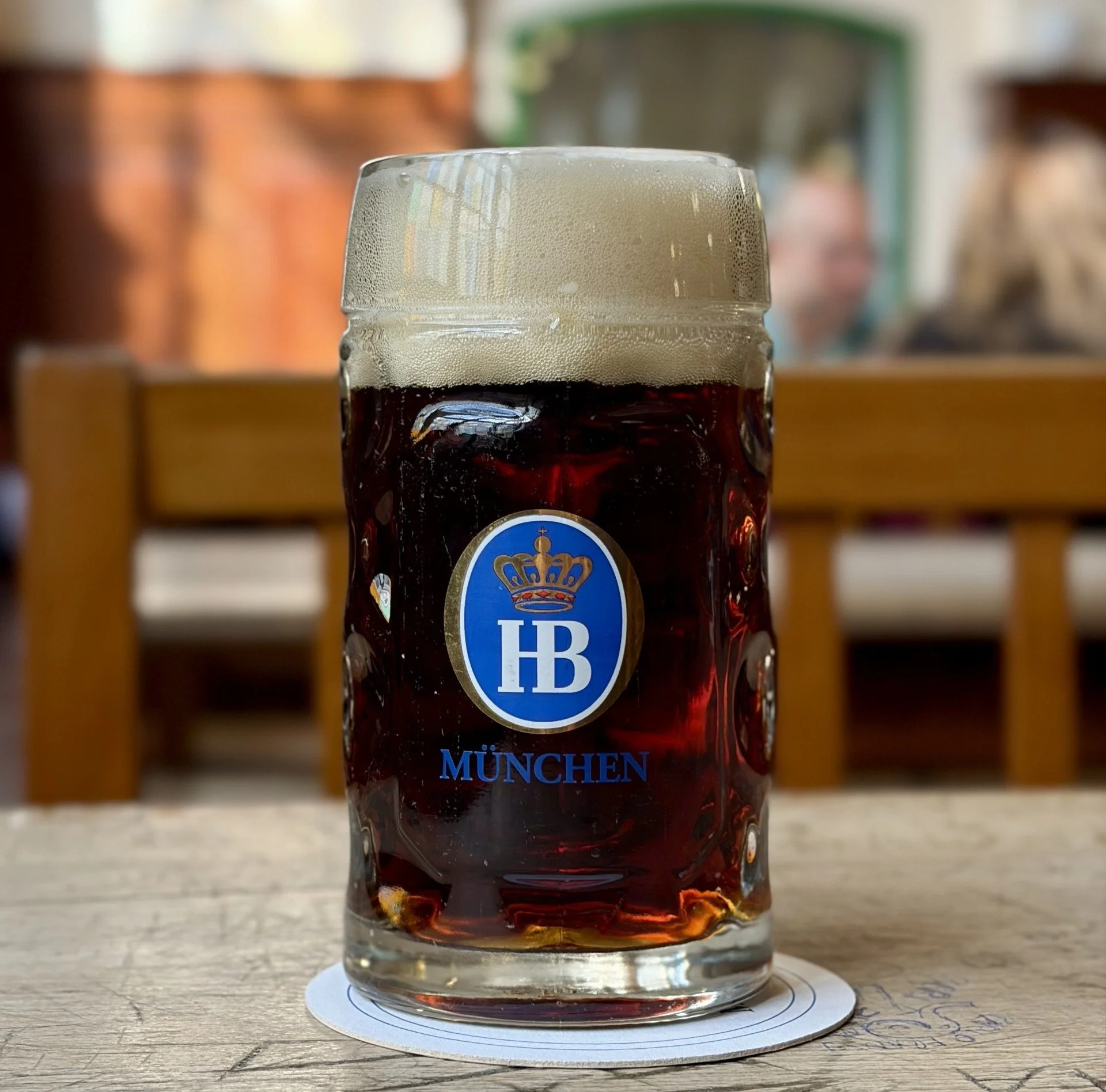
A Dunkel at Hofbrauhaus in a half liter Isar mug.

A Dunkel beer at Hofbräuhaus in Munich, served in a half liter Isar mug.


My half-liter Dunkel arrived in an Isar mug. The dimpled glass mug widely associated with Oktoberfest (though typically in one-liter format at that event) is named after the river that cuts through the city. Though this is also not my favorite vessel, I was very content to have it in the place where it got its name.

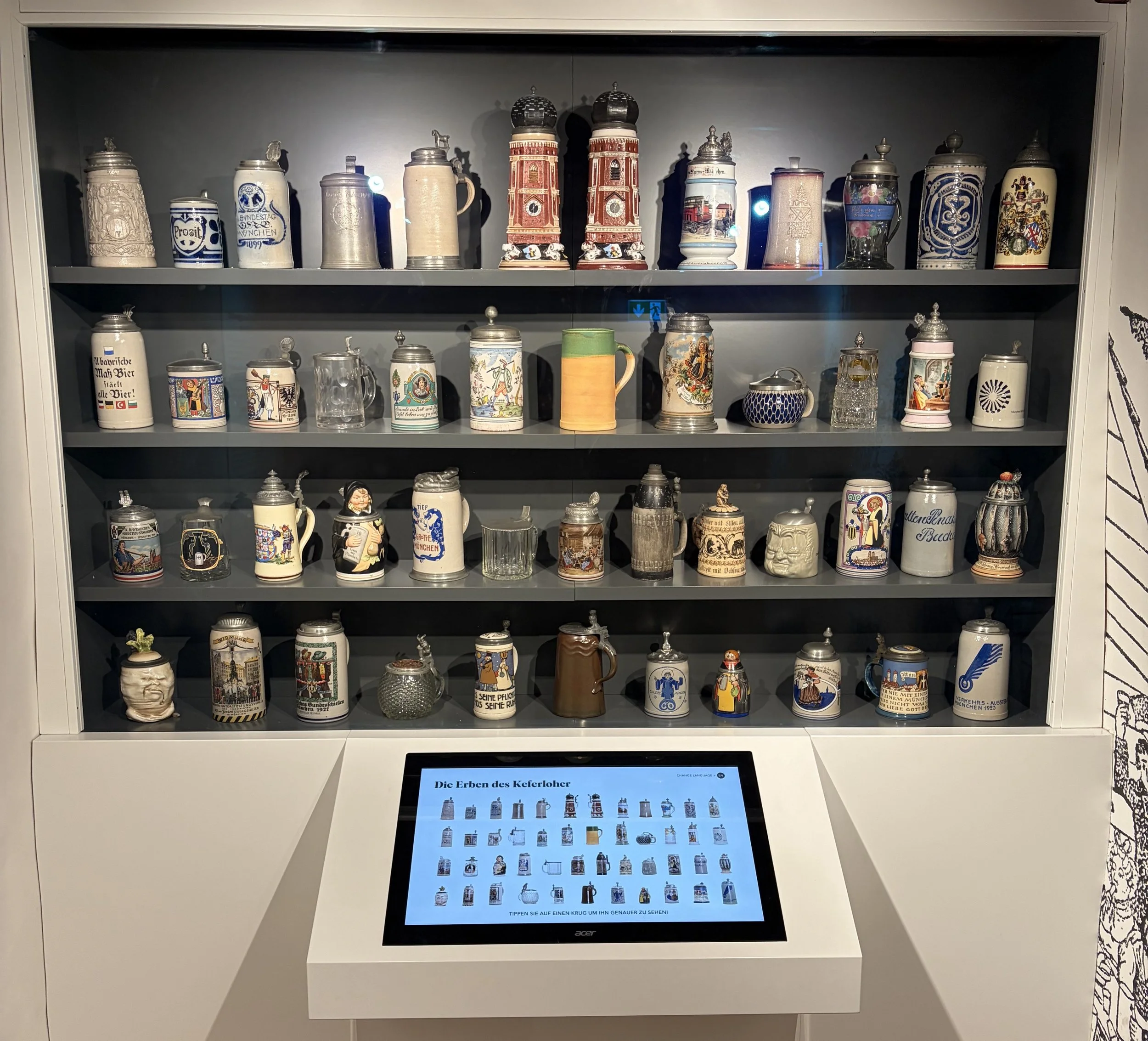
Finally, a highlight of the visit was a stop at the Beer and Oktoberfest Museum. The museum is an excellent short stop for beer nerds visiting the city, and it’s packed with tons of informative, fascinating bits of drinkware history, among other things.

Here are some of my favorite parts of the collection:

 
Interactive display at the  the Beer and Oktoberfest Museum with several shelves of drinkware and a screen in front of it that provides information on each.

Interactive display at the the Beer and Oktoberfest Museum.

 
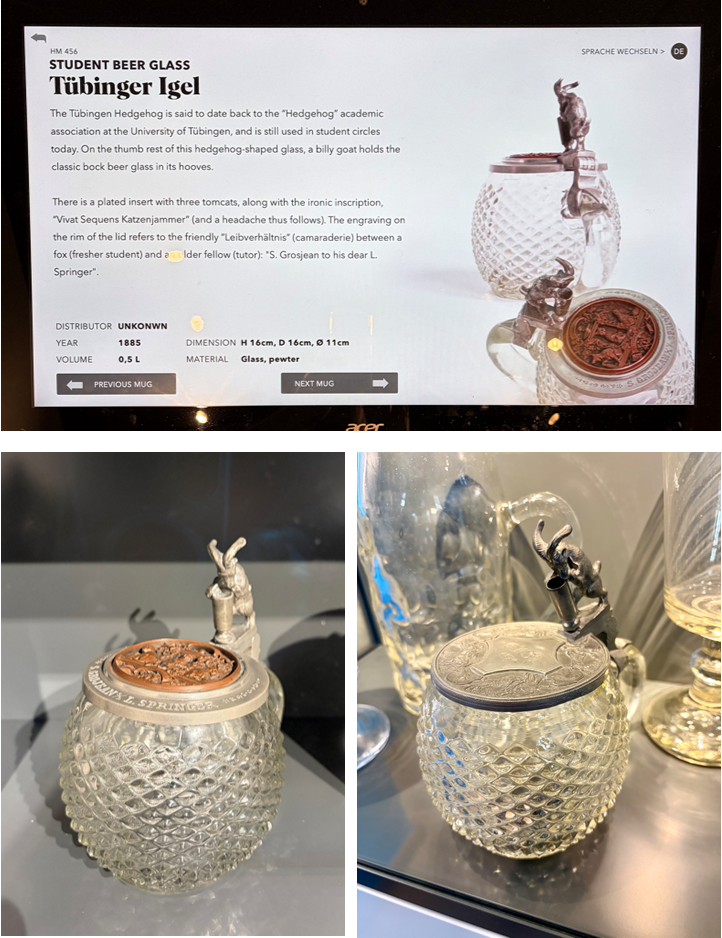
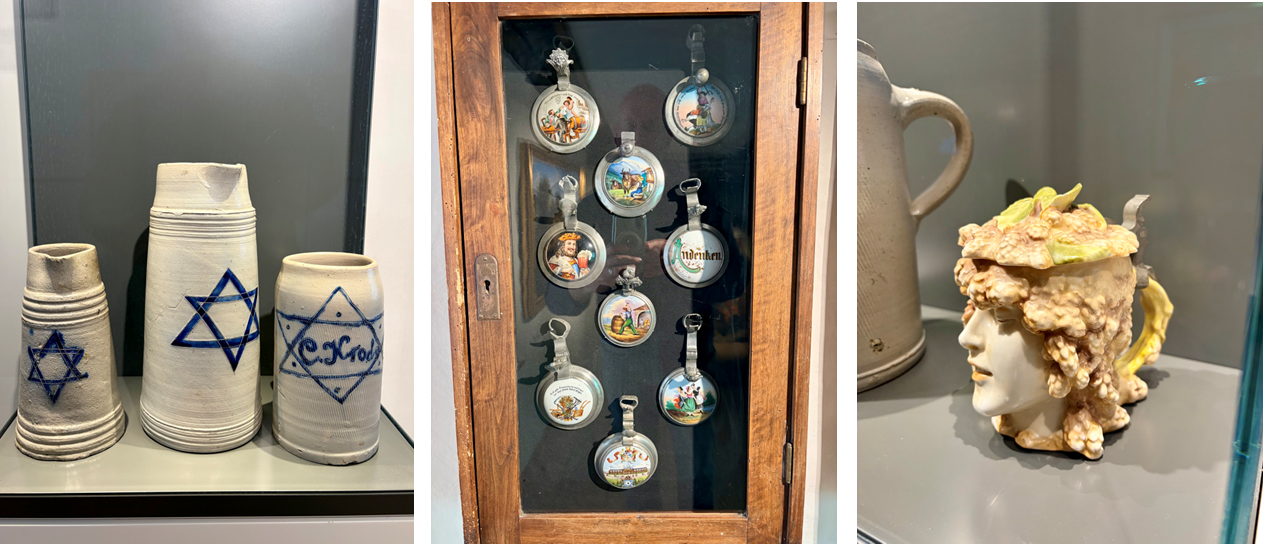
Three images including a museum description of the Tübinger Igel mug, as well as two pictures showing examples of the mug.

Top image is a screenshot from the Beer and Oktoberfest Museum describing the Tübinger Igel mug, followed by two examples. The mug’s texture is hedgehog like (Igel meaning hedgehog). Modern Tübinger mugs are called Tübinger Kugel, with Kugel referring to the dimples. Note the billy goat drinking from a pokal glass on the lid (though, not all Igel mugs had this style lid.)

 
Three images included one with three stone mugs depicting the brewer's star, another with a display of drinkware lids, and a thirds with stone mugs of a woman with hop hair.

On the left: Three stone mugs depicting the brewer’s star, a symbol of protection used in ancient times and believed to help ensure a good brew. Also later used by zoigl houses to indicate that beer was available for the public. In the middle: A variety of porcelain and pewter beer mug lids. On the right: the Queen of Hops, a porcelain and pewter, hand-painted mug.


That’s it for Bavaria. Next stop, the Czech Republic as a few folks DM’d me about the new Budvar/Baladin Teku mugs that were released by Rastal while I was away. I was originally going to include some thoughts on that here, but I’m going to save it for another brief post on Czech drinkware.

Keep it Simple and Classy: A Guide to the Only Beer Glasses You Need


Stocking beer glassware can be a daunting task. With so many options to choose from, it might be tempting to stick with a shaker pint. And while the shaker isn’t as bad as many make it out to be, it really shouldn’t be a major player either at a beer bar or your home bar.

But having a respectable selection of glassware doesn’t need to break the bank or become unmanageable. There are four widely available glass styles that are affordable, cover a wide array of styles, and will satisfy the most discerning beer drinker.

Here they are.

Willi Becher


The Willi Becher is one of the most versatile beer glasses available. Its simple, slender, and slightly curved shape makes it attractive without being ostentatious. The curvature helps it retain foam and carbonation. While it can be used for ales and mixed-fermentation beers, it’s especially well-suited for lagers, particularly given its Germanic origins.

You can also find it in an array of sizes from 10 to 20 ounces. So, there’s flexibility to fit your needs.

Use this glass with Helles, Dunkel, Vienna Lager, Schwarzbier, Märzen, Festbier, Bock, Baltic Porter, Czech Pale, Amber and Dark Lagers, German Rauchbier, and Adjunct Lager. However, you can cross over into ale territory with delicate beers like Kölsch, Altbier and Cream Ale too.

Fun fact: Becher means “cup” in German, and this one was created by a man named Willy Steinmeier. So, Willy Becher = Willy cup.

Tulip Pint


Though often associated with Guinness, the tulip pint glass is not proprietary and is widely used. And for good reasons. Like the Willi Becher, the simple design of the tulip pint has a subtle curvature, creating a better sensory experience than other beer glasses found in the British Isles (e.g., the nonic, dimple mug, and conical (aka shaker)). Its curvature helps enhance aroma and preserve foam better than these other glasses. And though it’s great for British-style beer, it works with others as well.

Generally found in a larger size (16-20 ounces, and don’t @me about a “proper pint”), this glass is best with low to mid strength beers that may include Bitter, Dark Mild, Brown Ale, Porter, Stout, Scottish Ale, Irish Red Ale, Blond Ale, Pale Ale, IPA and Amber Ale.

Stemmed Tulip


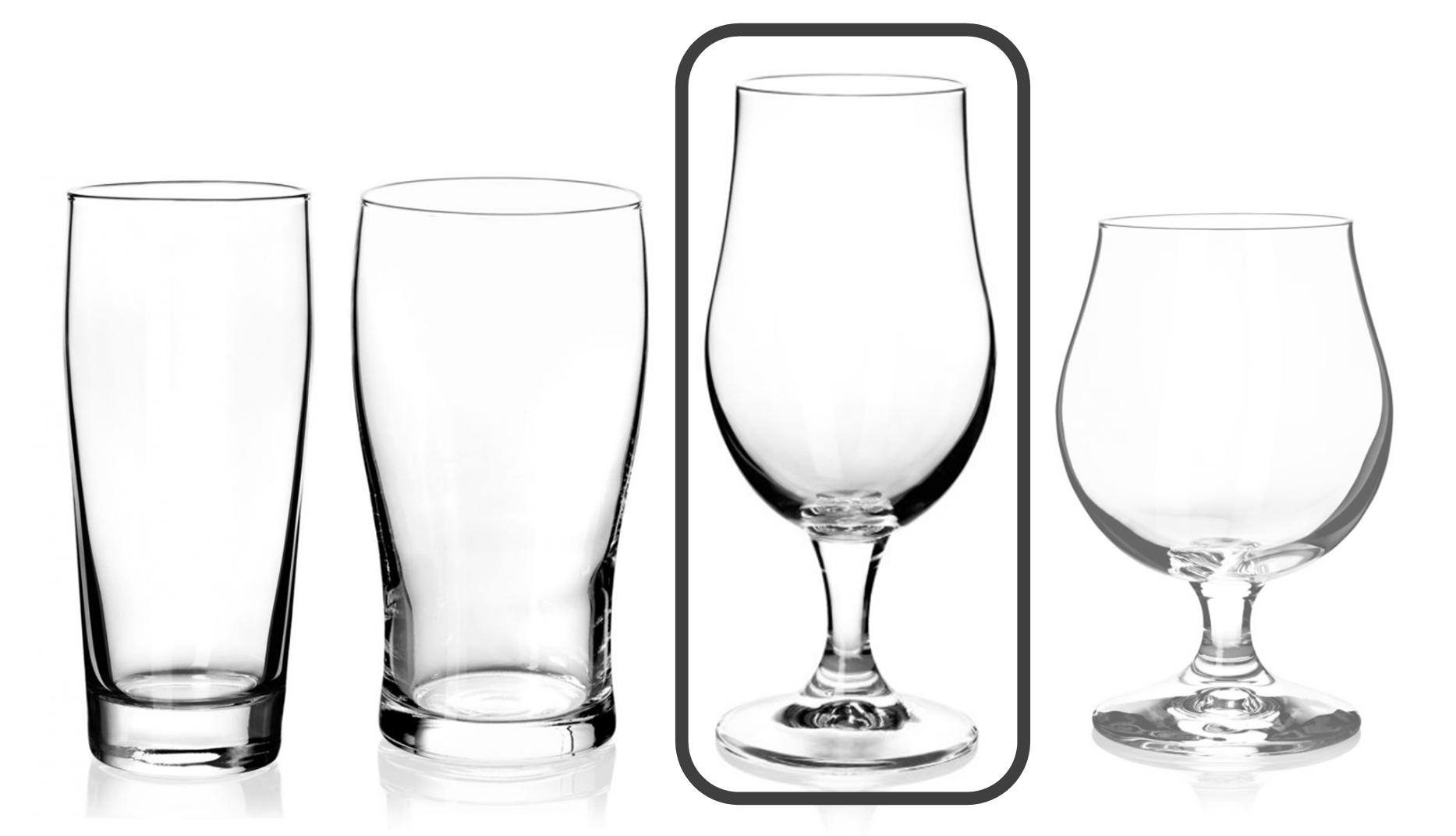
This one may be a little pricier than the others, but it is still within reason and is key to a well-rounded glassware selection. The stemmed tulip glass works best with a variety of Belgian beer styles, but it can be used with others. It’s an incredibly versatile glass that will elevate one’s beer drinking experience as it’s a little more dressed up in appearance, giving a more elegant flair than others. This subtly curved glass is ideal from a sensory perspective (you may be picking up on a pattern here by now).

They can be on the larger side, which accommodates a robust amount of foam.

Consider these styles for this glass shape: Dubbel, Tripel, Saison, Biere de Garde, Golden Strong Ale, Strong Dark Ale, Gueuze, Lambic, Wild Ale, Oud Bruin, Flanders Red Ale, and Witbier/Wheat Beer.

(A quick note: stemmed tulips can vary in shape. In particular, some have a much wider bowl than the glass depicted here. Those types of glasses are great, but I feel the narrower version depicted here lends itself better to a greater array of styles.)

Snifter


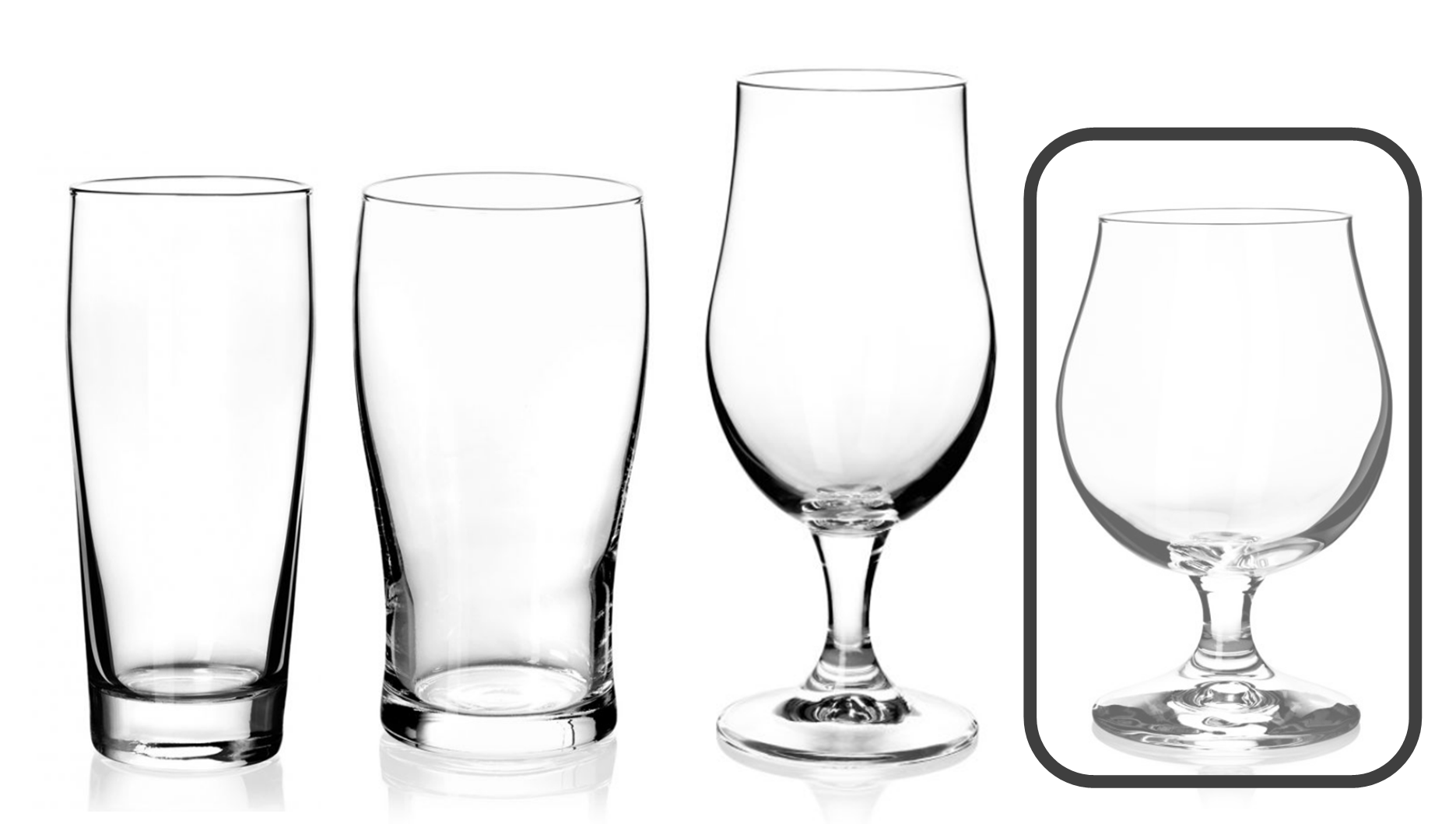
Sure, it’s occasionally nice when an unknowing bar serves a 12-percent stout in a 20-ounce shaker pint for a fraction of what the beer should cost. But strong, bold beers are properly served in a smaller vessel (holding 8-12 ounces), and a snifter glass is quite often best suited for these beers. A snifter beer glass is essentially a stout version of the stemmed tulip and it’s designed more for sipping rather than chugging. The intense curvature accentuates the aromas and enhances the sensory experience.

This glass is great for: Barleywine, Doppelbock, Double and Triple IPA, and anything “Imperial”.

--

Stick with these four, and your glassware game will be simple and stylish, meeting all your needs from Pilsner to Gueuze. And, you won’t have to spend an absurd amount of money to buy them!

(Original glassware images for this post come from the Sahm website.)